
Your life doesn’t need to look like everyone else. I know that sounds obvious, but it gets harder to remember when the world keeps handing you formulas for everything. There’s a right morning routine, an ideal home, a marriage template, a body standard, a career path, and apparently a correct way to do the holidays too. Successful women are somehow supposed to wear the right thing, eat the right thing, buy the right thing, post the right thing, track the right thing, read the right thing, and accomplish half a day’s work before 8 a.m. while the rest of us are still trying to remember why we walked into the kitchen.
And listen, formulas can be comforting. They make life feel less messy. They give us a starting point when we’re tired, uncertain, or standing in the middle of a season that feels like it came without instructions. But the danger comes when the formula starts replacing your own knowing. When the world keeps handing you formulas, your job isn’t to become different for attention. It’s to become honest enough to recognize what actually fits.
That’s where comparison gets sneaky. Someone else’s life looks so polished, so calm, so right, that you begin to wonder whether she found the answer and you missed the memo. So you copy the routine, the style, the goal, the schedule, the aesthetic, the holiday plan, the version of success. Not because it truly fits, but because it looks approved. And approval can be tempting when you’re afraid to trust yourself.
Sameness Sneaks In When You’re Trying to Do Life “Right”
Most of us don’t wake up one morning and decide to abandon ourselves for a beige aesthetic, an overstuffed calendar, and a set of goals that sound impressive but make our souls quietly leave the room. Sameness usually sneaks in while you’re trying to do life right. Good choices sound appealing. So does feeling less behind. It’s easy to want your home, body, relationships, work, routines, and life to reflect care, stability, and maybe a little evidence that you are not just wandering around with a grocery list and unresolved tabs open in your brain.
So you look around. Other people seem to have figured something out. Their habits, routines, clothes, homes, goals, and little systems begin to look less like inspiration and more like instructions. Before long, there’s the polished kitchen, the perfect morning routine, the softened linen wardrobe, the ambitious quarterly goals, the curated holiday table, and the calm woman who apparently meal preps, hydrates, journals, stretches, reads nonfiction, manages her inbox, and has never once eaten dinner over the sink while calling it “fine.”
There’s nothing wrong with being inspired. Inspiration can be lovely. It can show you what’s possible, give language to something you’ve wanted, or help you try a new way of caring for your life. The problem begins when inspiration turns into imitation without discernment. That’s when your life starts filling up with things that look good from the outside but don’t actually feel like you from the inside.
Formulas Can Help, But They Can’t Know Your Life
A formula can be useful. A routine can support you. A checklist can save your brain from having to remember one more thing while it’s already juggling dinner, deadlines, family logistics, and whether you moved the laundry before it developed a personality. Structure isn’t the enemy. Sometimes structure is what keeps real life from becoming a full-time scavenger hunt.
But a formula can’t know your life. It can’t know your body, your energy, your marriage, your household, your work, your grief, your caregiving load, your budget, your values, your health, your season, or what kind of day actually leaves you feeling supported instead of performative. A routine that makes one woman feel grounded may make you feel trapped by 7:15. A minimalist home may soothe someone else and make you feel like you live inside a very expensive waiting room. A business strategy, fitness plan, or holiday tradition may be perfectly good and still not belong to you.
That’s why the question isn’t, “Does this work for someone?” The question is, “Does this work for me, in this life, in this season, with the actual needs and desires I have now?” Research around self-concordant goals supports this idea too: goals aligned with a person’s deeper interests and core values are linked to more sustained effort, goal attainment, need satisfaction, and well-being. Which is a formal way of saying that a goal, routine, or life choice works better when it actually belongs to you. Formulas can offer a starting point, but they can’t replace your own discernment.
Comparison Makes Someone Else’s Life Look Like the Answer
Comparison has a way of making someone else’s life look like the answer. A calmer house starts to resemble peace. A stronger body begins to look like discipline. Add in the romantic marriage, happy kids, purposeful career, serene mornings, and suddenly your own perfectly decent life starts looking suspiciously wrong. Nothing actually changed. You just measured your inside against somebody else’s highlight reel with better lighting and probably a ring light.
Online, that gets even trickier because a life can be edited into a very convincing story. The clean counter is visible. The drawer where everything was shoved before the photo is not. The vacation smile makes the feed. The airport argument usually doesn’t. A beautiful meal gets posted; the meltdown about who forgot the salad mysteriously misses the carousel. And the polished routine rarely comes with a footnote explaining the support system, money, health, season of life, or personality that makes it possible.
That’s when fear starts whispering that perhaps you’re doing life wrong. Maybe you’re not ambitious enough, feminine enough, calm enough, organized enough, stylish enough, spiritual enough, disciplined enough, successful enough, or whatever flavor of “enough” the internet happens to be selling this week. But someone else’s life is not your answer key. Beautiful lives can inspire you without becoming instructions. Admiration doesn’t require imitation, and inspiration doesn’t mean your own life needs a redesign.
Approval Is Not the Same as Alignment
Approval can feel very convincing. Being understood feels good. So does having a life that makes sense from the outside. There’s something pleasant about the little nods of recognition that come when your home, work, clothes, body, marriage, schedule, and goals all seem to line up with what the world expects. We’re human. Of course affirmation feels nice. Nobody needs to pretend we’re floating above approval in a linen robe of enlightenment.
But approval isn’t the same as alignment. A praised choice can still feel wrong. A polished life can still feel hollow. An impressive routine can still make you resentful. A beautiful home can photograph perfectly and still fail to feel like a place where you can exhale. Even a perfectly sensible goal may belong to a version of you who no longer lives here.
Alignment is quieter than approval. It rarely arrives with applause. Sometimes it sounds more like, “This is simpler, but it feels honest.” Or, “This isn’t what I thought I’d want, but it fits who I am now.” Or even, “This may not make sense to everyone, but I can breathe inside it.” That matters, because you’re the one who has to live the life. The people watching from the outside don’t have to wake up inside your choices every morning.
Your Taste Is Information
Taste isn’t shallow, and preferences aren’t random. The things you love can tell you something. So can the things you keep noticing, return to, avoid, or find inexplicably irritating. Pay attention to what makes you feel more alive and what settles you. Notice what feels like home. Notice what makes you want to crawl out of your own skin. Those reactions are clues about what actually fits.
Not every preference needs to become a commandment. Something may feel wrong simply because it’s unfamiliar or inconvenient. You can also love something that makes absolutely no sense for this season of life. Fine. We’re not turning every passing mood into a personal manifesto. But when the same desire or irritation keeps showing up, it’s worth listening. A recurring pull toward quiet, beauty, color, freedom, structure, softness, privacy, adventure, connection, or simplicity may be trying to tell you something.
Learning your own taste is part of learning your own life. It helps you stop outsourcing every choice to trends, expectations, and people who don’t have to live with the results. What nourishes you matters. Your irritation can show you what no longer fits. Desire can show you where more room is needed. This isn’t about becoming precious. It’s about paying attention.
Don’t Be Afraid to Let Your Life Look Like You
Don’t be afraid to let your life look like you. Perfection from the outside isn’t the goal. Neither is making everything photograph neatly or match the formula, the trend, the approved timeline, or whatever version of “put together” the internet is currently selling with a discount code and a suspiciously calm voice. Other people get to look at the finished product. You’re the one who actually has to live there.
Real life happens inside those choices. You’re the one who has to wake up there, move through the day, love your people, and live with what you’ve built. Something can look impressive from the outside and still feel like a costume once you put it on. Meanwhile, an ordinary, imperfect, slightly difficult-to-explain life may make you deeply, quietly, honestly happy.
That’s the part comparison never tells you. Happiness may not look as impressive as approval, and peace doesn’t always photograph as well as polish. A life that truly fits may be far less exciting to strangers than one designed to perform beautifully for them. Good. They don’t have to live it. Once you stop shaping your choices around what will be understood, admired, or envied, there’s more room for what actually feels true.
Let Your Life Sound More Like You
Let your life sound more like you. Not as a performance or a brand, and certainly not as proof that you are delightfully unique in a way that deserves documentation and applause. Let it sound like you because chasing whatever looks correct from the outside gets exhausting, and at some point you get tired of abandoning your own knowing just to keep up with the dress code of somebody else’s life.
That may mean choosing color when everyone else is going neutral. Or perhaps simple and quiet feels better while the rest of the world is layering patterns and personality with great enthusiasm. Routines may get slower. Goals may get fewer. Holidays may get quieter. Clothes may get more practical, friendships more intimate, meals less photogenic, and your marriage may look boring to people who confuse drama with passion. Bless them, but no thank you.
A beautiful life doesn’t have to resemble everyone else’s. Meaning doesn’t require a formula, and strangers don’t need to be impressed for your choices to matter. The work is not becoming different just to prove you’re different. It’s becoming honest enough to recognize what fits, brave enough to choose it, and steady enough to let that be enough. There are worse things than being a little difficult to categorize.
 Want to break away from wanting your life to look like everyone else’s?
Dig deeper into your own desires.
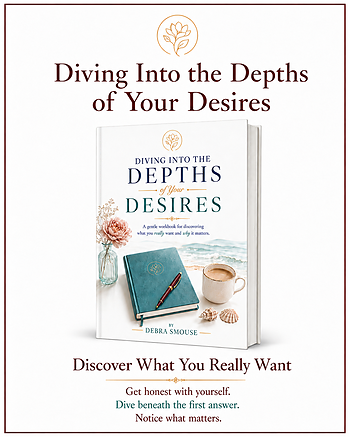
If your personal syllabus keeps circling the same interests, questions, or possibilities, that may be worth paying attention to. Diving into the Depths of Your Desires can help you look more closely at what you want and what may be asking for more room in your life.
Diving Into the Depths of Your Desires is a reflective workbook for exploring what you really want, what you may have outgrown, what keeps calling for your attention, and what might be worth making more room for. Through guided reflections, questions, and exercises, it helps you move beyond the sensible first answer and get curious about the woman you are now.
Purchase Diving Into the Depths of Your Desires