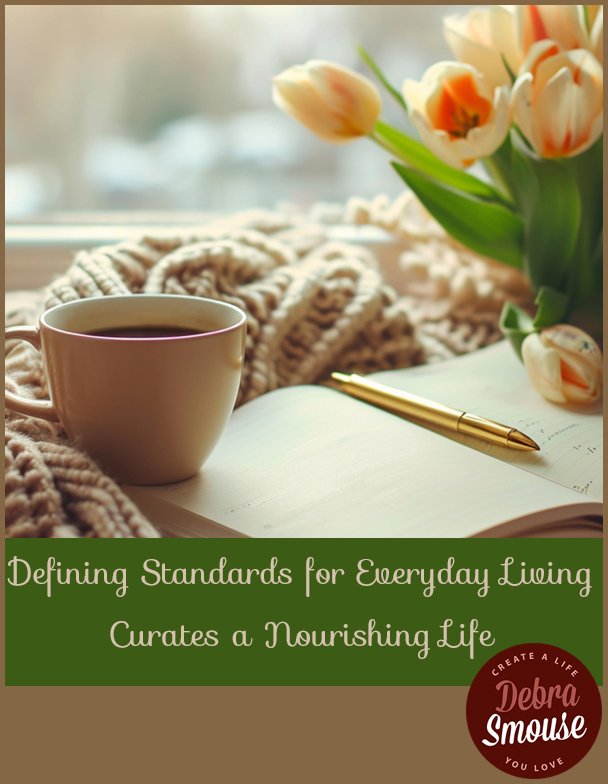

If you’ve been meaning to keep a journal, now is a beautiful time to begin. Not because you need another self-improvement project, another perfect morning routine, or another reason to buy a notebook you then feel morally obligated to use with your best handwriting. Please. We’re not turning journaling into a performance sport with decorative pens and shame as the scoring system.
But life is loud right now. Advice is loud. Social media is loud. The news is loud. Other people’s opinions, needs, expectations, and hot takes can get so loud that your own thoughts start whispering from the back of the room like, “Excuse me, do I still get a vote?” A journal gives those thoughts somewhere to go. It gives your inner life a place to land before it gets buried under errands, emails, obligations, and whatever mysterious task you remembered at 10:47 p.m.
And that may be the real gift. A journal isn’t there to make you more impressive. It isn’t there to prove you’re deep, disciplined, grateful, healed, creative, or spiritually evolved by Thursday. A journal is simply a place where you can tell the truth without needing to explain it beautifully. It’s a place to notice what you feel, what you want, what keeps repeating, what you’re avoiding, what still hurts, what matters more than you’ve been admitting, and what part of you is quietly asking for attention.
A Journal Gives Your Inner Life Somewhere to Land
Your journal isn’t a replacement for a good therapist, a wise friend, or real support when you need it. But it can become one of the safest places to tell the truth before you are ready to say it out loud. You can write the messy thought, the petty thought, the tender thought, the furious thought, the dream you’re afraid to claim, the disappointment you keep trying to minimize, and the question you can’t quite answer yet.
There is research behind this too. Studies on expressive writing have found that writing about emotional experiences can support well-being, including improvements in mood and reductions in anxiety for some people. Which is a very research-y way of saying that the page can give difficult feelings somewhere to go besides circling endlessly in your head.
That matters because so much of daily life asks us to keep functioning before we’ve had time to understand what is happening inside us. You can be moving through a real transition, a grief, a desire, a decision, or an identity shift while still answering emails and wondering if the leftovers are still trustworthy. Your journal lets you pause long enough to say, “Something is happening here, and I want to listen.”
And sometimes that is all you need at first. Not a solution. Not a breakthrough. Not a grand revelation that arrives with soft lighting and a soundtrack. Just a place where your inner life can stop knocking on the door and come sit down for a minute.
Writing by Hand Helps You Process, Not Just Record
There is something different about writing by hand. It slows you down. It asks your mind to move at the pace of the pen instead of the pace of panic, scrolling, or typing three paragraphs and deleting them before you’ve even admitted what you meant. The page gives your thoughts a little friction, and sometimes that friction is exactly what helps you hear yourself.
The study The Pen Is Mightier Than the Keyboard is technically about longhand note-taking, not journaling specifically. But it supports a useful point: writing by hand can encourage deeper processing because you are more likely to put ideas into your own words instead of simply recording everything as fast as possible. That is part of why a handwritten journal can feel so different from a note in your phone. It is not only storage. It is translation.
And no, this does not mean your journal has to become an academic exercise with sharpened pencils, excellent posture, and a stern little lamp. It simply means the act of writing can help you move beneath the surface. You may begin with “I’m tired,” and three sentences later realize you’re not only tired, you’re resentful, lonely, under-supported, bored, grieving, or hungry for something your calendar has not made room for yet. The pen has a way of gently telling on us, bless it.
When You Keep a Journal, It Help You See Your Patterns
One of the quiet powers of journaling is that it helps you see what keeps repeating. In your head, everything can feel like one big emotional weather system. You’re overwhelmed, irritated, uncertain, restless, hopeful, discouraged, and somehow also wondering what to make for dinner. But on the page, patterns begin to show themselves.
You may notice the same frustration every Sunday night. The same guilt every time you say no. The same desire that keeps returning no matter how many times you dismiss it. The same relationship dynamic, the same avoidance, the same dream you keep calling impractical, the same body signal you keep overriding, the same old story that casts the first vote before you even know you’re making a decision.
That kind of noticing isn’t about diagnosing yourself into the ground. Nobody needs to become a case study in her own notebook. It’s about gathering evidence. When you can see the pattern, you can stop treating every moment like an isolated failure and start asking better questions. What is this trying to show me? What keeps asking for care? What am I ready to stop repeating?
Journals Connect You With Your Values, Emotions, and Goals
A journal can help you reconnect with the parts of your life that get crowded out by the urgent things. Your values. Your emotions. Your desires. Your goals. The little inner yes that gets buried under obligation. The quiet no that you keep overriding because explaining it feels like too much work. The deeper want that keeps trying to get your attention while you’re busy being practical.
This is especially useful when you feel pulled in too many directions. A journal gives you a place to ask, “What matters here?” Strip away what looks impressive, what keeps everyone pleased, and what sounds productive enough to defend. What’s left is usually much closer to what actually matters, and that can cut through a surprising amount of noise.
And once you know what matters, even a little more clearly, your next steps become less random. You may not solve the whole thing in one sitting, because life is rude and rarely hands us a full instruction manual. But you can often find one honest next step, whether that’s a conversation, a boundary, an appointment, a plan, or some small act of care that matches the life you say you want.
You Write Yourself Into Your Own History When You Keep a Journal
This may be one of the most beautiful reasons to keep a journal. Your life deserves a record. Not only the polished parts, the milestone moments, the photographs where everyone behaved, or the stories that are easy to explain later. Your real life. The ordinary days. The questions you were carrying. The season that stretched you. The prayer you kept repeating. The decision that scared you. The tiny joy that somehow kept you going.
So many women have lived lives that were only recorded through what they did for other people: meals made, appointments kept, children raised, work finished, holidays hosted, emotional labor performed with a smile and possibly a casserole. A journal says, “I was here too.” It gives voice to your inner life, not because every thought has to become public, but because your own story deserves to exist somewhere in your own words.
And no, this doesn’t mean every entry needs to be profound. Some days your journal may hold a sentence about your mood, a complaint about your back, a note about the weather, a list of what needs doing, and a very sincere desire to move somewhere no one owns a leaf blower. That counts. Your life isn’t only made of grand declarations. It’s made of the small honest details that remind you who you were while you were becoming who you are.
Journaling Can Move You From Knowing to Doing
Insight is wonderful, but insight that never leaves the page can become another place to hide. We can understand ourselves beautifully and still avoid making the call, setting the boundary, changing the pattern, taking the walk, asking for help, or telling the truth. A good journaling practice doesn’t have to stop at awareness. It can help move you gently from knowing into doing.
That doesn’t mean every entry needs an action step. Please don’t turn your journal into a tiny productivity manager with better paper. But sometimes, after you’ve written your way through the fog, it helps to ask, “What’s one small thing I can do with what I know now?” Not five things. Not a whole life overhaul. Just one next thing.
That next thing might be rest. It could be a conversation, deleting the app for the afternoon, making the appointment, clearing the pile, admitting the want, or writing down the idea before you talk yourself out of it. Journaling is powerful when it helps you listen to yourself and then live a little more honestly because of what you’ve heard.
You Don’t Need a Perfect Journaling Practice
You don’t need the perfect notebook, the perfect pen, the perfect time of day, or the perfect personality to keep a journal. You don’t need to write every morning at sunrise while drinking herbal tea and looking peaceful in a shawl. If that’s your life, lovely. Enjoy your shawl. But most of us are writing between errands, before bed, in the car while waiting, at the kitchen table, or for seven minutes before someone needs something.
Start simple. Write a few lines. Write badly. Write honestly. Write the thing you’re tired of carrying in your head. Write the question you keep avoiding. Write the tiny good thing you don’t want to miss. Write one sentence that begins with, “Today I noticed…” or “What I really want to say is…” or “I keep thinking about…” and see where it leads.
The point isn’t to become a perfect journal keeper. It’s to give your life a place to land. Keep a journal because your own voice deserves a room where it can be heard without interruption. Keep a journal because your patterns, desires, griefs, ideas, and small ordinary moments are worth noticing. Keep a journal because sometimes the page is where you finally hear yourself say what you already knew, and that’s often where the next honest step begins.