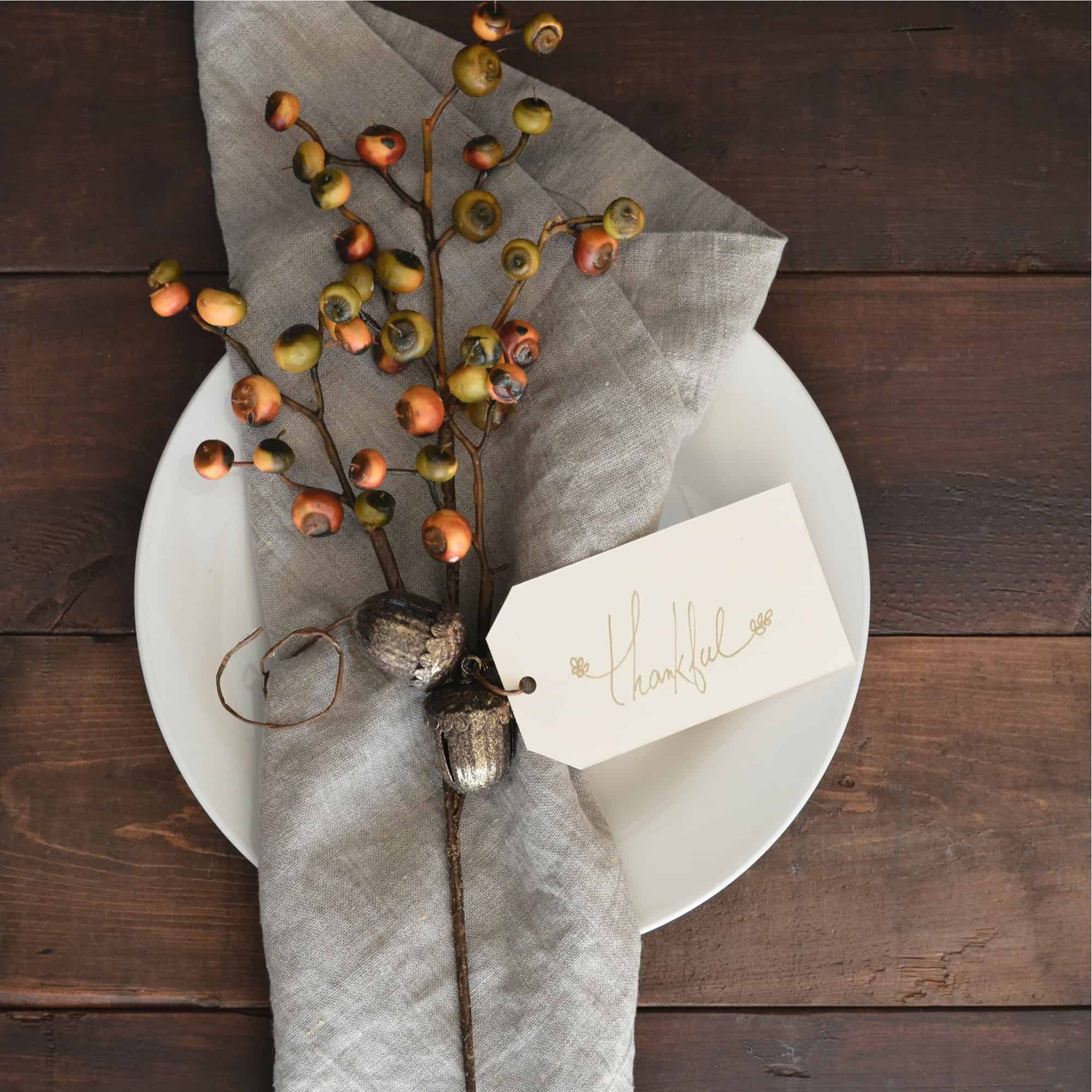

Gratitude and grief can sit surprisingly close together, especially once fall begins nudging us toward gathering, remembering, and taking stock. The table gets fuller. The light changes. Someone digs out the soup pot. There are apples at the market, mums on every porch, and suddenly the grocery store would like you to know that Thanksgiving is apparently an emergency requiring seventeen kinds of pie. It can be a lovely season, and it can also make the tender places in your life much harder to ignore.
It’s possible to have plenty to be grateful for and still miss someone so fiercely that an ordinary Tuesday catches you off guard. A family gathering can be filled with people you love while the empty chair reminds you of someone who used to be there. Even a happy and satisfying life can hold grief for a marriage, a friendship, a home, a version of your family, a dream that never quite unfolded as expected, or simply the way things were before everything changed. None of those losses diminishes the goodness that’s still here.
That is the thing we sometimes get wrong about gratitude and grief. We act as though one should eventually overpower the other, as if enough appreciation ought to make loss quieter or enough sadness means we have somehow failed to notice our blessings. But human beings are capable of carrying more than one truth at a time. You can be grateful for this life and still ache over something missing from it.
Gratitude Doesn’t Always Feel Simple
We tend to talk about gratitude as if it should arrive wearing a cheerful sweater and carrying a nice pen. Make the list. Count your blessings. Name three good things before bed. I actually like gratitude practices, and I think paying attention to what is good can change the texture of an ordinary day. Sometimes the smallest things really do help: the first sip of coffee when the house is still quiet, clean sheets after a long week, a friend who sends exactly the right text, dinner that tastes better than you expected.
But gratitude gets much more complicated when something important has been lost. You may sit down to a beautiful meal and remember who taught you the recipe. You may hear everyone laughing in the next room and suddenly think about the person whose laugh is no longer part of the noise. A tradition you’ve loved for years may feel strange because one small detail has changed, and that detail turns out not to be small at all. Grief has terrible timing that way. It does not check the calendar to see whether everyone else has agreed this is supposed to be a happy occasion.
If that happens, you do not need to turn gratitude into a corrective. You don’t have to respond to sadness by immediately listing everything you should feel fortunate to have. The good things are still good. The loss is still a loss. Gratitude becomes more honest, not less, when it can include both. Sometimes the most truthful sentence available is simply, “I am so grateful for this, and I wish that were still here too.”
Abundance Has Always Had a Shadow Side
We usually picture abundance as fullness: baskets spilling over, a pantry stocked for winter, a table with more dishes than anyone could reasonably eat, and the satisfaction of seeing something come to fruition after months of tending. Fall is particularly good at giving us that image. Everywhere you look, the season seems to be celebrating what has ripened, what has been gathered, and what is finally ready to be enjoyed.
But the old stories knew abundance was never quite that simple. Demeter is the goddess of grain and harvest, yet the story we remember most strongly about her begins with Persephone’s disappearance and a mother’s refusal to pretend that abundance means very much while her daughter is gone. The fields stop producing because Demeter’s grief changes the world around her. It is not a story about learning to cheer up and appreciate the wheat. It is a story about how deeply love and loss can be woven into the same life.
That is part of what makes fall such an honest season. The leaves are magnificent precisely as they are letting go. The garden gives what it has grown, and then it begins to die back. We bring pumpkins and apples and late tomatoes into the kitchen while the evenings grow darker and the trees grow bare. Beauty and loss are not taking turns. They are happening at once, which may be why this season can feel both generous and strangely tender.
Full Seasons Can Make Empty Places Louder
The weeks when everyone is gathering can make absence feel especially obvious. A missing person may be missed every day, but the holidays have a way of drawing a circle around the empty place. There are names on the invitation list, seats around the table, old photographs appearing in your phone memories, recipes pulled from drawers, and traditions that come with their own cast of characters. When one of those people is gone, changed, estranged, ill, or simply no longer part of your life in the way she once was, the season notices.
And grief is not limited to death, although that is often what we mean when we use the word. You can grieve the family you thought you would have, the friendship you expected to last forever, the house you loved, the health you used to take for granted, the children who grew up and built lives elsewhere, or a relationship that still exists but no longer feels the way it once did. You can even grieve an older version of yourself while being quite happy with the woman you are now. Loss is not required to fit neatly into one category before it hurts.
So if the season makes an empty place louder, you do not need to scold yourself for noticing it. There is no moral victory in pretending the changed tradition feels exactly the same, nor is there any prize for performing cheerfulness convincingly enough that nobody asks questions. Sometimes the kindest thing you can do is admit, at least to yourself, “This is harder for me than it used to be.” Naming that does not ruin the holiday. It simply tells the truth about the life you brought with you to it.
You Don’t Have to Choose Between Gratitude and Grief
One of the strangest expectations we place on ourselves is the idea that feelings should line up neatly behind one another. First we grieve, then we heal, then eventually we become grateful and wise about the whole experience. Real life is rarely that cooperative. It’s entirely possible to laugh until you cry over something ridiculous and then find yourself crying for an entirely different reason ten minutes later. The pie can be delicious, the conversation wonderful, and the afternoon thoroughly enjoyable, even while you’re wishing someone else were there to complain that the crust should have been thinner.
It’s also possible to be profoundly grateful for a life that contains something you’d change in a heartbeat if given the chance. Loving the life you’re living now doesn’t require rewriting the past until every loss becomes a blessing. Some experiences were simply painful, and some endings brought changes you never wanted. There are people whose absence will always be felt because they were deeply loved, and no amount of searching for a silver lining makes their absence preferable to their presence. Gratitude for what remains doesn’t diminish the importance of what was lost.
And that’s one of the things I appreciate most about gratitude. It doesn’t require us to make a bargain with our memories or decide which feelings we’re entitled to have. There can be genuine happiness in the present alongside a longing for something that belongs to the past. A wonderful gathering can bring both laughter and memories of someone who isn’t there to share it, just as a satisfying new chapter of life can coexist with affection for one that’s ended. Those experiences don’t compete with one another, and there’s no need to choose which one deserves our attention. There’s room for both at the table.
Let the Season Hold Both
If this season feels tender, you are allowed to make some room for that tenderness instead of organizing your entire life around concealing it. Maybe you make the old recipe even though it makes you cry halfway through. Maybe you leave it off the menu this year because you cannot bear it yet. Perhaps you light a candle, tell a story, say someone’s name, visit a cemetery, look through photographs, or quietly toast the person who should still be sitting across from you.
You may also discover that joy keeps showing up whether you invited it or not. Someone tells a story you have heard fifty times and you still laugh. A child says something absurd at dinner. The potatoes are perfect. The weather gives you one of those crisp blue afternoons that makes you want to stay outside a little longer. You do not have to refuse those moments because you are grieving. Enjoying something does not mean you have forgotten anyone or stopped caring about what was lost.
And you are allowed to make practical adjustments too. Maybe you stay for dessert but not another three hours. Perhaps you decide the elaborate tradition can become a simpler one. Or maybe you do not attend every gathering simply because you always have. Grief can be tiring in ways that are difficult to explain to people who are not carrying the same loss, and there is nothing noble about arriving home completely wrung out because you thought you had to prove you could still do everything exactly as before.
What Still Nourishes You Matters
When you are hurting, nourishment may look much smaller than people expect. It may not be a grand revelation or a perfect holiday surrounded by everyone you love. It might be soup eaten from your favorite bowl while you watch an old movie. A walk when the air smells like leaves. A friend who remembers the anniversary without requiring you to explain why the day is hard. Someone handing you coffee and changing the subject because you have already talked about it enough for today.
Sometimes the very things that bring comfort also carry memories of someone we’ve lost. A favorite recipe written in your mother’s handwriting can make you smile at her crooked measurements and remember all the times she prepared it. Hearing a song your husband loved might bring back wonderful memories while leaving you wishing he were there to hear it again. And telling a familiar family story can keep everyone laughing, especially when somebody inevitably gets one detail wrong and the rest of the family insists on correcting it. These moments aren’t about getting over anything. They’re ways of keeping love and memory woven into the life that continues.
That may be the kind of abundance worth noticing when gratitude and grief are sitting at the same table. Not the demand that everything be full, cheerful, healed, and beautifully arranged, but the quieter abundance of still being able to taste something delicious, laugh at something ridiculous, remember someone dearly, accept comfort, offer love, or be surprised by beauty in a life that has also contained loss. Grief tells you that something mattered. Gratitude tells you that something still does. There is no need to ask either one to leave.
Allow Gratitude and Grief to Exist Side by Side
Snag a free workbook and get inspiration on all the ways to love your life even more.
>>Click Here to Discover Additional Articles on Strategies to Get Your Life on Track <<