

A blank hour on the calendar can look wonderfully available until you arrive there tired, distracted, and already mildly annoyed by three things that weren’t on the schedule. If you want to plan around your energy, that difference matters. Nine in the morning is not the same as 3:30 in the afternoon after six decisions, four interruptions, a weird email, and the realization that dinner is apparently happening. Again. (Seriously, night after night?!)
A lot of us were taught to treat pushing through as the responsible choice. Tired? Push harder. Behind? Speed up. Overwhelmed? Make a better list and then feel mildly betrayed by the list. When you’re building something, caring for people, managing a home, running a business, doing client work, or simply trying to keep ordinary life from becoming a full-time logistics department, it can seem like there’s no other option.
But pushing through works best as an emergency setting, not a permanent operating system. Eventually it starts costing more than it gives, because the plan keeps demanding energy you may not actually have.
A better way to plan is to work with the woman who really lives your life. Yes, my dear, the one looking at you in the mirror. No, not the imaginary version with unlimited focus, perfect sleep, cooperative hormones, no interruptions, and a suspiciously cheerful relationship with admin tasks. She sounds delightful, but she is fictional. Your actual life deserves a plan built around your actual capacity.
Time on the Calendar Is Not the Same as Capacity
One of the sneakiest planning mistakes is assuming open time means available energy. You look at your calendar and see three free hours, so naturally you assign those hours something ambitious, focused, and emotionally demanding. Then the time arrives and your brain stares at the screen like it has never seen words before in its life.
That doesn’t mean you’re lazy or undisciplined. You may technically have an hour available and still not have the mental clarity to use it well. An open afternoon doesn’t automatically come with emotional bandwidth. After a week of decisions, errands, people, noise, and regular human nonsense, even a wide-open weekend may be asking for recovery rather than a full-scale life reinvention.
This is called wisdom, my dear. Not laziness.Because a calendar can tell you what space exists, but it can’t tell you what kind of energy you’ll have inside that space. That’s why planning only by time can leave you feeling behind even when you’re doing plenty. You keep assigning high-demand work to low-capacity moments, then blaming yourself when the whole thing feels heavier than it should.
Pushing Through Comes With a Cost
Sometimes you do have to push through. There are deadlines, appointments, launches, clients, sick kids, hard weeks, and seasons when the only real option is to get the essential thing done and deal with the emotional paperwork later. Real life isn’t always generous with timing.
The problem is when pushing through becomes your default. You override fatigue, ignore the dip in your energy, and keep saying yes to the pace you planned when life was calmer. You try to produce, answer, create, decide, manage, and show up as if your capacity hasn’t changed. Then you wonder why you feel resentful, foggy, brittle, or like one more request may turn you into a woman who communicates exclusively through eye twitches. This, by the way, my dear, is called burnout.
And the cost isn’t just tiredness. Pushing past capacity can drain your clarity, creativity, patience, health, and your ability to feel present inside your own life. It can make work you normally enjoy feel like punishment and small tasks feel weirdly enormous. Sometimes the problem isn’t that you’re failing. It’s that the plan was built for a version of you who didn’t have to live the week you just lived.
Decide What Actually Has to Happen
When everything feels urgent, start with the full list and figure out what really has to happen. Skip what would simply be nice, what would make you feel caught up, and whatever your ambitious beginning-of-the-quarter self thought sounded reasonable while drinking coffee and briefly believing in miracles. Focus on what actually has to happen.
That can be uncomfortable because a lot of us like the idea of keeping everything moving at the usual pace. We want the inbox handled, the project built, the post written, the house managed, the appointment scheduled, the people answered, and life progressing nicely according to plan. But when your capacity drops, trying to keep every plate spinning usually means none of them gets your best attention.
Choosing what matters most isn’t giving up. It’s being honest about what this week can hold. Maybe the essential thing is the client deadline, the appointment, the proposal due Friday, the child who needs you, or the rest your body has been begging for. The rest may need to wait, get simpler, or limp along for a few days. And annoying as that may be to the part of you that likes control, quite often nothing important breaks.
Learn Your Own Natural Energy Rhythm
Years ago, I used a method I called “heat mapping.” It’s a process of paying attention to your natural energy flow throughout the day instead of pretending every hour has the same potential. Because it doesn’t. Some people are early birds. Others are night owls. And some are sharpest mid-morning, foggy after lunch, and suddenly convinced they can solve their entire life at 10:47 p.m., which is rude because the next morning absolutely sends an invoice.
For me, mornings are my best window. First thing, I can think clearly, write, make decisions, and do the work that actually requires my brain to show up with shoes on. Around 11, my energy dips. By 3 or 4 p.m., I’m usually done in any meaningful sense, even if I’m technically still upright. And yes, sometimes I get a late-night burst if I’m still up, but I pay for it. The next day is never impressed by my midnight ambition.
Once you know your natural rhythm, planning becomes less about forcing yourself to be productive all day and more about matching the right work to the right energy. Put the work that requires focus, discernment, writing, strategy, hard conversations, or real attention into your clearest hours when you can. Save the lower-demand tasks for the dip: filing, light admin, easy replies, tidying notes, folding laundry, scheduling, simple errands, or anything that doesn’t require your soul to operate at full brightness.
This isn’t about arranging your life so perfectly that you can only function when the moon, your mood, and your coffee are aligned. Life won’t always cooperate that neatly. But when you start noticing your own patterns, you stop setting yourself up to fail. You stop asking your 3:30 p.m. brain to do 8:00 a.m. work and then acting shocked when it responds by staring into the middle distance.
Let This Season Be What It Is
The hardest part of planning around your energy may be letting some things wait without turning that into a character indictment. The laundry may stay in the basket. Dinner may be simpler than planned. The grocery run can happen tomorrow. A text might sit unanswered for a while. The house may look lived in. The extra errand, favor, or project may need to wait. And somehow, despite all this scandalous imperfection, the earth may continue rotating.
That doesn’t mean you’re lowering your standards. (And if this season requires you to lower them a little, that’s okay too.) Instead, it means you’re telling the truth about the season you’re in. High-capacity seasons can hold more. Low-capacity seasons need clearer priorities. Recovery seasons need space. Demanding work seasons need margin somewhere else. Caregiving seasons may not be the moment to launch three new personal goals and become a person who makes homemade granola unless that genuinely delights you, in which case carry on, you mysterious woodland creature.
The goal isn’t to do less forever, my dear. It’s to stop treating energy like an inconvenient detail in your own life. Planning around what you actually have available isn’t weakness. It’s a more honest way to work with the season you’re in. And that gives you a much better chance of building routines, habits, and expectations that last longer than one adrenaline-fueled sprint.
Plan for the Life You Actually Have
Planning around your energy isn’t a perfect system. Some days will still go sideways. Other mornings won’t be as clear as you hoped. Even low-energy tasks may still annoy you because apparently “easy admin” can have audacity. But when you pay attention to your real capacity, you stop treating every dip, delay, or adjustment as failure.
Instead of forcing the original plan, you can ask what truly needs you today, what kind of energy you actually have, what work belongs in this window, and what can wait without everything collapsing. That’s a kinder and more useful way to plan because it takes your body, mind, and actual life into account.
You are not a machine with a calendar. You are a person with rhythms, limits, seasons, and responsibilities that shift. So stop planning for the imaginary woman with endless energy and a perfectly clear head. Plan for the real one, the one who has good morning hours, an 11 a.m. dip, a 3 p.m. wall, and enough self-knowledge to stop scheduling deep work after her brain has already left the building.
That’s not laziness. That’s what it looks like to stop pushing through your life and start working with it.
Creating a vision can help you plan around your energy.
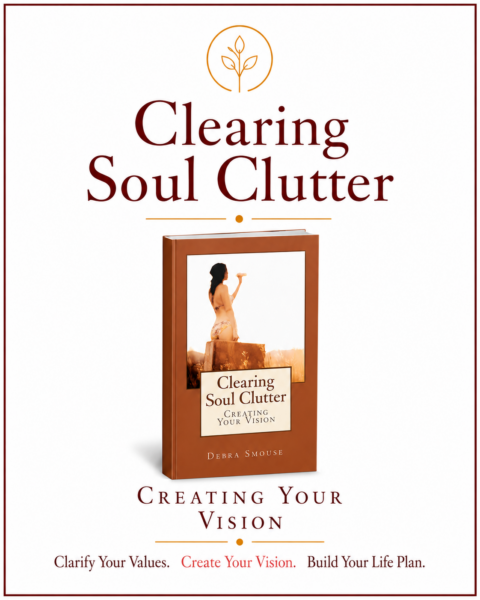 Now in Paperback: Clearing Soul Clutter: Creating Your Vision
Knowing what you want is one thing. Creating a life that reflects it is another. Clearing Soul Clutter helps you get clear about what matters most, what you want your daily life to feel like, and the choices that can move you closer to that vision.
Through a series of 30 thoughtful lessons and exercises, you’ll explore your values, your non-negotiables, your goals, and the kind of life you want to create. Rather than simply letting life happen around you, you’ll begin making more intentional choices about what stays, what changes, and what deserves more of your attention.
Clearing Soul Clutter: Creating Your Vision is $9.95*
Available on Amazon in Paperback and Kindle . You can also purchase it in paperback on Barnes & Noble on-line.
You May Also Find These Articles Helpful
 How to Stay Motivated in Fall: Energy Tips for Shorter Days
 Stay Motivated Year-Round: Seasonal Habits and Energy Hacks for Productivity & Joy
 Aim the Arrow for a Life You Love by Creating a Vision and a Plan
 What’s Draining Your Energy? How to Notice and Reclaim It
 Make Monday Your Favorite Day: 10 Simple Habits for #MondayMotivation