

If you’ve been wondering what’s draining your energy, please start by dropping the idea that low energy means you’re lazy, unmotivated, or secretly failing at adulthood. Sometimes you’re tired because you’re carrying too much, ignoring too much, tolerating too much, and trying to function inside a life that keeps making withdrawals without offering much back. And honestly, if your day is built around everyone else’s needs, constant noise, unfinished tasks, and a lunch that could best be described as “three crackers and a feeling,” no wonder you’re depleted.
Energy isn’t only about getting more sleep, though please, let’s not act like sleep is optional. It’s not only about eating better, moving your body, drinking water, or stepping outside, though all of those things matter. Your energy is also shaped by the conversation you keep replaying, the room that makes your shoulders tighten, the promise you keep breaking to yourself, the tabs open in your brain, and the tiny irritation you keep dismissing because it seems too small to count.
But small things count when they repeat. This isn’t about becoming precious or delicate, as if the goal is to create a life where nothing ever annoys you, drains you, or asks anything of you. That would be lovely for about six minutes and then wildly unrealistic. It’s about noticing where your energy is leaking so you can stop blaming yourself for feeling depleted and start making small, honest changes that help you feel more like yourself again.
Stop Treating Low Energy Like a Character Flaw
When you feel tired, scattered, or flat, it’s very easy to turn on yourself. You tell yourself you should have more discipline, more motivation, more capacity, more whatever magical ingredient would let you handle everything on your plate without sitting in the car for ten minutes before going inside like a woman preparing for battle. But low energy isn’t always a character flaw. Often, it’s information.
It may be pointing to something physical: not enough rest, not enough food, too much noise, too many obligations, too many days of pushing through while your body keeps quietly asking whether anyone in management is reviewing these working conditions. Or the signal may be emotional. You may be holding things together no one else can see, replaying conversations, bracing for the next demand, or carrying more disappointment, resentment, worry, or grief than you’ve admitted out loud.
Sometimes the way you’re doing life technically works, but only if the goal is to get through the day while quietly losing your sparkle and your patience. A kinder starting point is to ask, “What’s my low energy trying to tell me?” The answer may be physical, emotional, or practical. Your body may need more rest, your heart may be carrying more than you’ve admitted, or your brain may be tired of tracking all those open loops like a personal assistant who hasn’t had a lunch break since 2018. Get curious before you get cruel. Low energy doesn’t mean you’re broken. It means something needs attention.
Notice What’s Draining Your Energy and Leaving You Heavier
One of the simplest ways to understand your energy is to notice how you feel after contact with something. After the conversation, the scroll, the errand, the meeting, the meal, or the hour of “just checking a few things” online that somehow turned into a full tour of everyone else’s opinions, outfits, outrage, and vacation photos, ask yourself whether you feel more like yourself or less like yourself.
That question is wildly clarifying. Some drains are obvious, but others are quieter: the friend who only calls to unload, the cluttered room that makes your shoulders tighten every time you walk through it, the habit of reading the news until your body feels like it swallowed a thunderstorm, or the thought that keeps whispering, “You should be further along by now,” as if that has ever helped anyone become more peaceful and productive.
This is where self-trust comes in. When you notice what leaves you feeling heavier, you begin to respect your own signals. You stop brushing everything off with “it’s fine” when your body is clearly saying, “Darling, it’s not fine, and I’ve prepared a slide deck.” You don’t have to make sweeping changes immediately. Sometimes awareness is the first honest step, and once you see the pattern, you can begin making different choices: less time there, a clearer boundary here, a shorter conversation, a calmer morning, a little less input, and a little more space.
Pay Attention to the Tiny Unfinished Things
Not every energy drain is deep and emotional. Some of them are tiny undone tasks sitting around your life like rude little goblins: the burned-out light bulb, the dry cleaning bag by the door, the return you keep meaning to make, the appointment you haven’t scheduled, the drawer that sticks every time you open it, or the email that needs a two-sentence reply but has somehow become a moral crisis.
These things usually aren’t urgent, which is why they hang around so long. They’re small enough to dismiss, but visible enough to keep poking your attention. Every time you pass one, your brain clocks it as another loose end: still not handled, still waiting, still over there quietly judging you beside the recycling. One unfinished thing is annoying. Ten unfinished things become background static.
This isn’t about becoming obsessive or deciding every tiny task must be handled immediately. Real life comes with undone things. But when the same small task keeps taking up space day after day, it may be costing more energy than it would take to handle it. If you’re feeling drained and can’t figure out why, try making a tiny unfinished-things list. Not a twelve-page document called Everything I Have Failed to Handle Since 2019, because that isn’t a list, that’s emotional vandalism. Just write down five small undone tasks that keep tugging at your attention, then choose one. Sometimes reclaiming energy looks less like a dramatic wellness plan and more like finally taking the dry cleaning out of your car before it becomes a traveling exhibit of your avoidance.
Add One Thing That Gives Energy Back
Once you begin noticing what drains your energy, the next step isn’t to overhaul your whole life. Your tired self doesn’t need a full renovation, a new routine with subsections, or twenty-seven fresh commitments wearing the cute little hat of self-improvement. She needs one thing that gives energy back.
That one thing may be physical, mental, emotional, or environmental. It might be a real lunch, a ten-minute walk, turning off one notification, leaving a conversation sooner, asking for help, clearing one surface, making your bedroom feel a little more restful, or finally fixing the thing that’s been annoying you every time you see it. Sometimes the smallest supportive choice can change the whole mood of a space, especially when it says, “This part of my life is allowed to support me,” instead of “Welcome back to the museum of unfinished business.”
The magic isn’t in the size of the action. The shift comes from choosing something that gives back instead of only taking. And yes, once you reclaim a little energy, you may need to protect it. If you finally make space and then immediately hand that space to the same drains, you’ll be right back where you started, only now with fresh resentment and maybe a cleaner drawer. So keep it simple: notice one drain, close one open loop, add one energy-giving choice, and protect one bit of space long enough to feel the difference.
Journal Prompts for Noticing What Drains Your Energy
Before you try to fix your energy, take a few minutes to notice where it may be leaking. Your journal is the perfect space to work through your thoughts. Remember, this doesn’t have to become another self-improvement project. Let these questions help you hear what your life has been trying to tell you.
-
- When during the day do I feel most like myself?
- After which conversations, tasks, habits, or spaces do I feel heavier?
- Name one unfinished thing that keeps tapping me on the shoulder.
- Where have I started calling depletion “normal”?
- Which habit promises relief but leaves me more drained?
- Who or what needs less access to my energy right now?
- This week, what is one thing I can add that gives energy back?
Let your answers be honest and specific. You don’t need to diagnose your entire life by dinner. Just notice one place where your energy deserves a little more protection.
Reclaiming Your Energy Starts With Noticing
If you’re asking what’s draining your energy, don’t only look for the obvious culprits. Look at the small things too: the thought you keep repeating, the person who leaves you heavier, the unfinished task that keeps tapping you on the shoulder, the habit that promises relief but leaves you more depleted, the space that makes you sigh every time you walk through it, or the routine that no longer supports the life you’re actually trying to live.
You don’t have to fix everything at once. In fact, please don’t. That’s how a helpful reset becomes another exhausting project with a cute name and a short life expectancy. Start by choosing one drain you can reduce and one thing that gives energy back. Maybe the next right move is handling the burned-out bulb because it annoys you every morning, taking the walk you keep postponing because your body needs air, eating an actual lunch because three crackers and a feeling is not a meal, or saying the no you already know you need to say.
Let the choice be small, but let it count. You’re not trying to become endlessly productive or prove you can manage one more thing. You’re giving your energy a little more protection because you deserve to feel present and alive inside your own life.
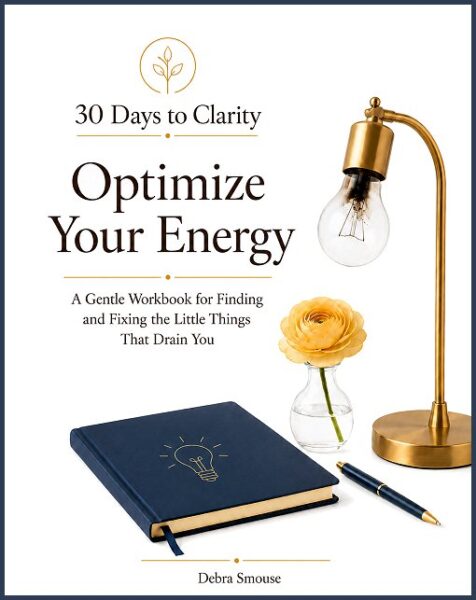 Are undone things what’s draining your energy? I can help!
Sign up for 30 Days to Clarity Monthly News, and I’ll send you Optimize Your Energy, my free workbook for finding and fixing the little things that drain you.
You’ll also receive monthly encouragement for clearing clutter for your mind, body, and soul.