
There’s a very specific kind of exhaustion that comes from overthinking decisions. Not because you don’t care. Not because you’re flaky, irresponsible, or incapable of choosing. Usually, it’s because you care so much that every choice starts feeling like it has to pass through a full internal review board before it’s allowed to exist. What should I wear? Should I send the email? Say yes? Take the opportunity? Spend the money? Start the creative thing? Should I wait or ask seventeen more people and then ignore half of what they say?
Darling, no wonder you’re tired. That is not discernment. That is your brain setting up a tiny courtroom in the middle of your life and refusing to adjourn.
And the sneaky part is that overthinking often looks responsible. You tell yourself you’re being thoughtful. You’re weighing the options. You’re being careful. You’re trying not to make a mistake, disappoint anyone, waste money, miss an opportunity, or choose something you’ll regret while future-you stands there with one eyebrow raised. Some decisions do deserve thought, of course. We are not choosing a job, a move, a relationship, or a major investment with the same energy we use to pick a candle scent at Target. But there is a difference between thoughtful consideration and keeping yourself stuck in the lobby of your own life, waiting for certainty to come sign the permission slip.
Why Smart Women Overthink Decisions
The women who struggle most with overthinking decisions are rarely careless. They are usually thoughtful, capable, responsible women who can see seventeen angles before breakfast. They think ahead. They consider consequences. They know their choices affect other people. They can imagine the practical, emotional, financial, relational, and possibly astrological implications of a decision before they have even finished their coffee.
That ability can be useful, but it can also make every choice heavier than it needs to be. A simple email becomes a referendum on tone. An invitation becomes a moral dilemma. An outfit becomes a question of identity, comfort, visibility, and whether you are emotionally prepared to be perceived in public. A money decision becomes a debate between care, fear, practicality, guilt, and the fantasy version of you who always knows exactly what is wise and never buys the wrong shoes.
This is where the decision stops being just a decision. It becomes a test. What does this say about me? Will people think I’m selfish? Am I being irresponsible? Is this aligned? Is this fear? Is this intuition? Is this avoidance? Is this the right time? Should I be more certain? And suddenly, the actual choice is buried under so much meaning that no normal human answer can breathe under there.
The Hidden Cost of Overthinking Decisions
The cost of overthinking decisions is not always dramatic. It usually shows up quietly, in the time, energy, and attention that get swallowed by choices that never fully land. You rewrite the email until it no longer sounds like a person wrote it. You debate the invitation until the event has passed. You circle the opportunity so long that the opportunity quietly gets up, puts on its coat, and leaves.
And while your mind is running every option through another round of analysis, life keeps moving. Time does not pause politely while you wait to feel perfectly clear. Decisions still get made, either by you or by delay, avoidance, default, resentment, fatigue, or someone else’s timeline. Not choosing is not neutral. Sometimes it is simply a choice that refuses to introduce itself.
The deeper cost is self-trust. Every time you treat your own knowing like it needs one more outside confirmation, you teach yourself that your clarity is not enough. Every time you make a decision and then reopen the case ten minutes later, you teach yourself that your choices do not count unless they come with total certainty. And sweetie, total certainty is rarely available. She is off somewhere with perfect lighting and no real responsibilities.
Why Clarity Works Better Than Certainty
Overthinking decisions usually comes from wanting certainty. You want to know the right answer before you choose. You want proof. You want a guarantee. You want the universe to slide a neat little note under the door that says, “Yes, darling, this is the correct decision, and no one will be disappointed, and you will never regret it, and your hair will look nice that day too.”
Lovely. Unlikely.
Certainty asks for a level of control real life does not usually provide. Clarity is different. Clarity does not promise that nothing will go wrong. It simply gives you a reference point. What matters here? What am I building? What do I already know from experience? What direction am I trying to move in? What standards have I already learned I need to honor?
Once you have a reference point, the decision does not have to be processed from scratch every time. You are not standing in the middle of every choice like it is a blank universe. You can ask whether this email, invitation, opportunity, expense, creative project, boundary, or yes/no actually fits the life you are trying to live. That does not remove all discomfort. But it does cut through a lot of noise.
The 4-Question Filter to Stop Overthinking Decisions
There is a point where a decision stops needing more thought and starts needing a landing place. Not a perfect answer. Not a guarantee. Just enough clarity to choose and let the choice become real.
That is where a simple filter helps. Not because life is simple. Please. Life is often a casserole of timing, feelings, obligations, money, hope, fear, and someone asking what’s for dinner. But a filter gives you a way to stop treating every decision like it deserves unlimited access to your mental energy.
Use these four questions when you notice yourself circling the same choice without getting clearer.
Question One – Does this align with my values?
This question brings the decision back to what matters instead of what is loud. A choice may look practical, impressive, convenient, or easy to explain, but if it does not align with your values, your body usually knows before your brain finishes building the defense.
Maybe the opportunity looks good on paper, but it would require you to abandon the kind of life you keep saying you want. Maybe the invitation is harmless, but saying yes would mean giving your already-thin energy to something that does not matter to you right now. Maybe the email you are about to send is technically polite, but it edits out the truth because you are trying to manage someone else’s reaction.
Alignment does not always feel sparkly. Sometimes it feels steady. Sometimes it feels like relief. Sometimes it feels like, “This may be uncomfortable, but at least I am not lying to myself.” That counts.
Question Two – Does this belong in my future?
Something can be perfectly fine and still not belong in the direction you are moving. That is annoying, but useful. Not every decent option deserves to come with you. Not every invitation, habit, role, friendship dynamic, project, or opportunity fits the life you are trying to build now.
This question is especially helpful when the decision is not bad, just not aligned anymore. The volunteer role you once loved now drains you. The project that used to feel exciting now feels like emotional sandbags. The way you have always handled money, visibility, creativity, or rest may technically still work, but only if the goal is to keep being the same version of you who has already outgrown the arrangement.
Ask whether this decision supports the future you are trying to move toward, or whether it keeps you loyal to a version of life that no longer fits. If you have to keep reshaping yourself around it, that is information. If the answer requires you to leave yourself behind, that is not clarity you need to keep debating. That is a clue with a name tag.
Question Three – Does this honor my standards?
This is where overthinking often turns into bargaining. You already know what drains you. You already know what makes you resentful. You already know which kinds of commitments, conversations, spending choices, work rhythms, or relationship patterns leave you feeling like you need a nap and a small witness protection program.
The issue is usually not awareness. It is whether you are willing to let that awareness matter in the moment.
Standards are not about being rigid or precious. They are the patterns you have lived enough times to recognize. If you know saying yes on the spot leads to resentment, then “I need to check my calendar and get back to you” is not rude. It is a standard. If you know certain purchases come from panic, comparison, or the desire to become a shinier woman by Thursday, then pausing before you spend is not deprivation. It is a standard. If you know working late every night turns you into a person who mutters at cabinets, then protecting your evening is not laziness. It is wisdom with better boundaries.
A decision that repeatedly violates your standards does not need a full dissertation. It needs honesty.
Question Four – What one piece of information would actually change this?
This question separates real uncertainty from avoidance wearing a cardigan. Sometimes you genuinely need more information. You need the price. The deadline. The medical result. The contract terms. The schedule. The answer from the other person. Fine. Name the missing piece and go get it.
But if you cannot name the information that would actually change the decision, you may not be gathering information anymore. You may be delaying the discomfort of choosing.
“I just need more time” can be real. It can also be the phrase your fear uses when it wants to keep the decision suspended forever. So ask yourself, “What specific information would change my answer?” If there is something real, get it. If not, more thinking may not be helping. It may just be keeping the decision active so you do not have to let it land.
Let the Decision Hold
Here is the part that may feel the most uncomfortable: the issue is not always needing better decisions. Sometimes the real work is learning not to abandon the decisions already made. Overthinking decisions often continues after the choice is technically finished. The yes gets mentally cross-examined. The no gets followed by an imaginary tour of everyone’s possible reactions. The chosen direction gets dragged back into the courtroom as if it never counted in the first place.
That is where the energy goes. Not always in choosing, but in refusing to let the choice settle.
Letting a decision hold does not mean becoming stubborn or ignoring new information. If reality changes, adjust. If new facts appear, respond. If the decision truly needs revisiting, revisit it like a grown woman with a chair and a pen, not like a panicked raccoon in a filing cabinet. The problem is not thoughtful adjustment. The problem is reopening the case every time discomfort shows up and starts acting like it has legal authority.
So use the filter. Does this align with my values? Does this belong in my future? And does this honor my standards? What one piece of information would actually change this? If nothing new appears, decide. Let the decision hold. Adjust when reality calls for it, but stop renegotiating the choice just because the brain gets bored, scared, or overly invested in running another review.
Because the goal is not to make perfect decisions. The goal is to build enough self-trust to choose, move, learn, and keep living.
That version cuts the separate discomfort paragraph because it was good, but not necessary. The idea is already carried by “discomfort shows up and starts acting like it has legal authority.”
Stop overthinking decisions by creating a vision for your life.
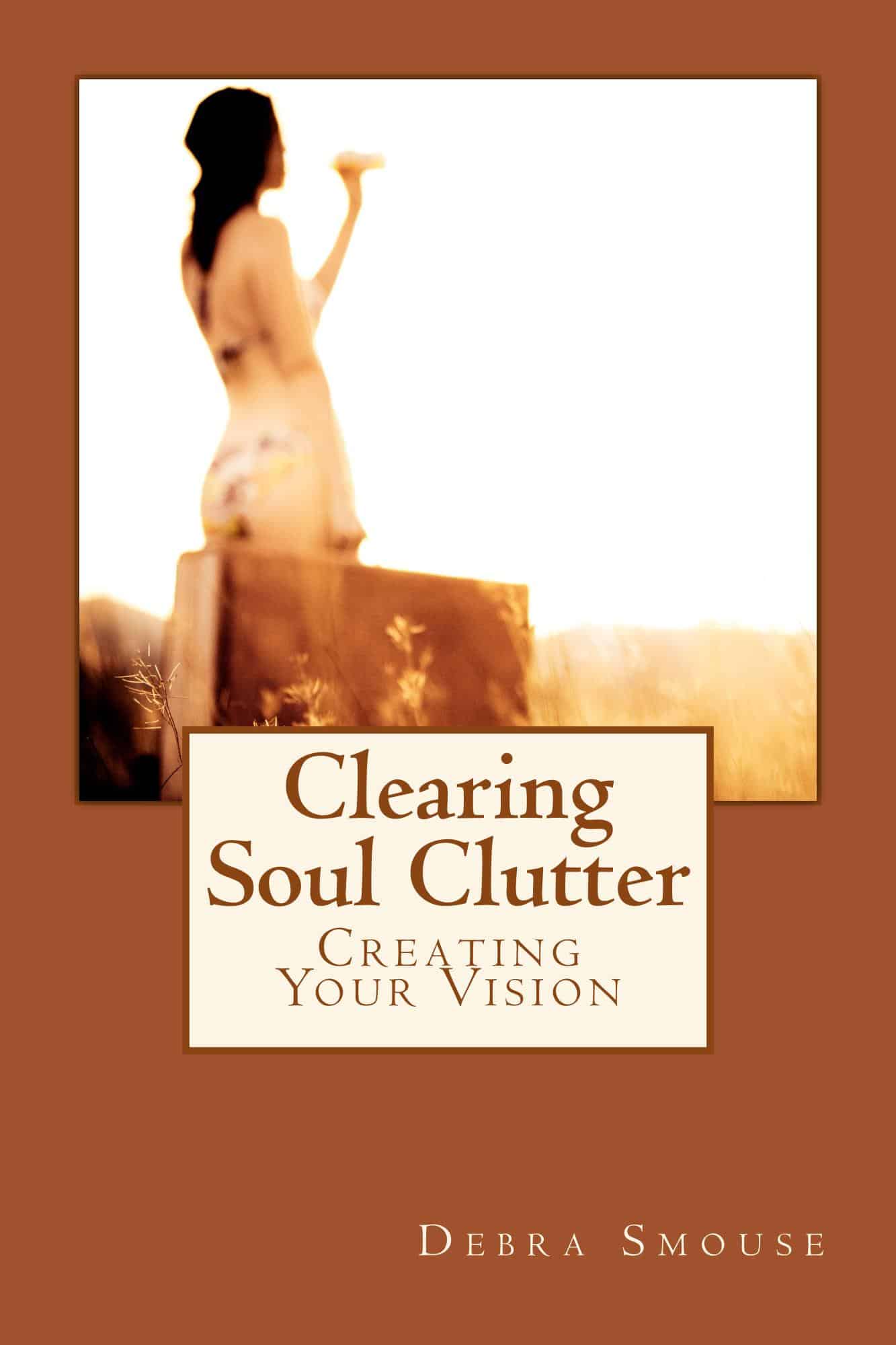 Now in Paperback: Clearing Soul Clutter: Creating Your Vision
The key to being content is knowing what you want and putting it in place. Clearing Soul Clutter helps you determine your true goals so you can start setting up your ideal circumstances. Based on a proven method that has helped hundreds design their dream existence, this book will teach you exactly how to imagine what you want and how to make it actually happen.
Through a series of 30 intuitive lessons, you’ll learn how to envision a nourishing life and make your dreams come true. It’s time to stop letting life happen to you and start doing something about it.
Clearing Soul Clutter: Creating Your Vision is $11.95*
Available on Amazon in Paperback and Kindle . You can also purchase it in paperback on Barnes & Noble on-line.