You know that feeling when you walk into a space and instantly feel lighter? Shoulders drop. Breath slows down. You’re not thinking about what needs to be cleaned, fixed, or organized—you just are.
That doesn’t happen by accident.
Your home shapes your mood in ways you don’t always notice. And when you’re in the early stages of planning your space—figuring out where and how you want to live, maybe even considering whether to build on your lot—this is your chance to think beyond square footage and start thinking about how your home will actually feel.
Why Space Affects Your Mind
Your brain is constantly scanning your surroundings. Clutter, lighting, noise, layout—it all feeds into how safe, calm, or overwhelmed you feel.
Research shows that clutter increases cognitive load and anxiety, while poor lighting can disrupt your sleep and mood. On the flip side, thoughtful design—good layout, natural light, calming colors—can lower stress levels and improve emotional stability.
In simple terms: your home is either calming your nervous system or overstimulating it.
So how do you intentionally design for peace of mind?
Start with less, not more
Most stress at home comes from too much stuff.
Every item competes for your attention. Even when you’re not actively noticing it, your brain is processing it.
Start simple:
-
- Clear surfaces first (nightstands, counters, tables)
- Keep only what you use or genuinely enjoy
- Leave intentional empty space
That “empty” space? That’s what gives your mind room to breathe.
Let light do the heavy lifting
Light is one of the fastest ways to shift how a space feels.
Natural light boosts your mood, improves sleep, and makes everything feel more open. If you don’t have much of it, work with what you’ve got:
-
- Sheer curtains instead of heavy ones
- Mirrors to bounce light around
- Warm, layered lighting in the evening
Bad lighting makes even a clean home feel off. Good lighting can make an average space feel calm and inviting.
Design for how you actually live
This is where a lot of people get it wrong—they design for a version of life that doesn’t exist.
Be honest:
-
- Do you work from the couch?
- Do you eat at the coffee table?
- Do things tend to pile up in certain spots?
Instead of fighting your habits, design around them. A peaceful home isn’t rigid—it adapts to you.
This is also where bigger decisions start to matter more than people expect.
The choice between adapting to an existing home or starting from scratch can directly affect how well your space supports your routines. If you’re still figuring that out, it’s worth looking into the pros and cons of buying vs building a new home before you commit.
Create a “you zone” (especially if you have kids)
If you have kids, you already know—perfectly styled spaces don’t survive more than a few hours.
Toys spread. Noise happens. Life is… active.
So instead of trying to control the whole house, claim a small corner that’s just yours.
It doesn’t have to be big:
-
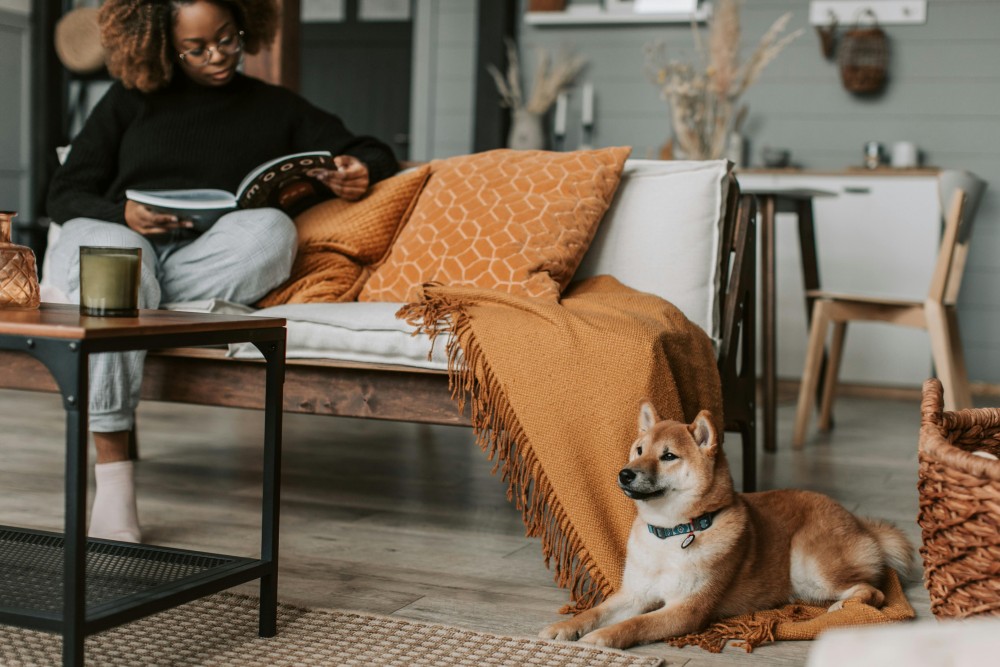
- A comfortable chair or a small rocking chair
- Soft, warm lighting
- A tiny coffee table with a plant and a couple of books
- Maybe a blanket you don’t have to share
That space becomes your reset button. Even if the rest of the home is loud and messy, you have one spot that signals: this is where I slow down.
And honestly, that’s more realistic—and more valuable—than chasing a spotless house 24/7.
Think cleaning before decorating
Here’s something people rarely talk about: your design choices either make cleaning easy… or make it a constant battle.
If your space is hard to maintain, it will never feel peaceful. Period.
A few smart moves:
-
- Furniture either elevated (easy to vacuum under) or fully grounded (no awkward gaps collecting dust)
- Fewer tiny decor items that need constant moving and wiping
- Closed storage where it makes sense
Especially in high-use areas, simplicity wins every time.
Kitchen and bathroom = silent stress zones
You might not think of them this way, but your kitchen and bathroom have a huge impact on your mental state. Even something as simple as renovating your kitchen can create a more calming and functional environment that positively influences your daily mood.
If they’re cluttered, poorly organized, or hard to clean, they create low-level stress every single day.
Focus on:
-
- Clear countertops in the kitchen (daily reset makes a big difference)
- Logical storage—things where you actually use them
- Easy-to-clean surfaces
In the bathroom:
-
- Keep only essentials visible
- Add soft lighting if possible
- Bring in one calming element (a plant, a nice soap dispenser, a textured towel)
These spaces are part of your daily routine. When they feel good, your day starts and ends better.
Bring in a bit of nature
You don’t need a full Pinterest jungle.
Just a few natural elements:
-
- A plant in the corner
- Wood, linen, or stone textures
- Fresh air whenever possible
Nature has a grounding effect. Even small touches can shift the energy of a room.
Make it personal (but intentional)
A peaceful home isn’t empty—it’s edited.
Keep things that:
-
- Have meaning
- Make you feel good
- Reflect who you are
Let go of things you’re keeping “just because.”
Your space should feel like support, not obligation.
The bottom line
Peace of mind at home doesn’t come from perfection. It comes from alignment.
Spaces that are easy to maintain. Corners that let you reset. Light that works with your body. A layout that fits your real life—not an idealized version of it.
Get those things right, and your home starts doing something powerful—it stops demanding energy from you, and starts giving it back.
Little things can upgrade the quality of your daily life.
Snag a free workbook and get inspiration on all the ways to love your life even more.
>>Click Here to Discover Additional Articles on How to Fall in Love with Yourself and Your Life <<