
When your surroundings reflect an older version of you, it can feel strange in a quiet, hard-to-name way. Nothing may be technically wrong. The room still functions. The drawer still closes. The closet still holds clothes. The routine still gets you through the day. But every so often, you walk through your own life and feel that little internal tug that says, “This doesn’t quite fit the woman I am now.”
That’s the strange thing about growth. Internally, you may be changing. Your values shift. Your needs get clearer. Your tolerance for certain things drops. You start wanting more ease, more beauty, more honesty, more space, or simply fewer daily irritations that make you mutter under your breath like a woman who’s had enough. But your outer life doesn’t always update at the same speed.
When Your Life Still Reflects an Older Version of You
You might have a version of this in your home. Maybe it’s the living room that looks fine, technically, but feels like a waiting room for a life you haven’t quite started yet. Nothing’s broken. No one would walk in and gasp. But when you sit there, you feel the dull little hum of “this will do,” which is very different from “this feels like me.”
Maybe it’s the bedroom you’ve been meaning to do something about since before the pandemic, which at this point isn’t so much a timeline as a confession. You meant to clear off the chair, replace the lamp, hang the art, donate the clothes, change the bedding, or finally do something about the corner that’s become a museum exhibit titled “Things I’ll Deal With Later.” You’re not lazy. You’re probably just tired of making decisions inside a space that already feels disconnected.
Or maybe it’s your closet, full of clothes for a version of you who no longer lives in your body, your calendar, your taste, or your actual daily life. Maybe it’s the kitchen drawer that silently mocks you every time you open it. Maybe it’s the car you climb into every day and feel that little internal sigh of, “Oh. This again.” The point isn’t that these things are morally significant. It’s that your daily life keeps giving you evidence of a woman you used to be, while the woman you’re becoming is standing there wondering when she gets a say.
“Fine” Is Not the Same as Fitting
Most of us don’t question what’s merely fine. We question what’s obviously broken, embarrassing, painful, or inconvenient enough to finally demand action. But fine slides under the radar. It’s livable. It’s functional. It doesn’t require a decision today, which is exactly how it becomes the place where disconnection quietly sets up camp.
This is where your home can become a kind of self-portrait, but not in a precious, magazine-spread way. I’m not suggesting your throw pillows need to communicate your personal evolution. Please. We’ve suffered enough as a people. I mean your surroundings often reflect what you believe you’re allowed to use, enjoy, release, repair, replace, and stop tolerating. They show you what you keep walking past and calling good enough.
And listen, we don’t need to be cruel to the woman who made those choices. Maybe she was raising children and everything needed to be washable, wipeable, and not emotionally devastating if someone spilled juice on it. Maybe money was tight, and making do wasn’t a mindset. It was a necessity. Maybe she was grieving, overwhelmed, exhausted, or just trying to get through the day without one more thing asking for her attention. She did what she could with the capacity and resources she had. But you’re allowed to notice when what once helped you cope no longer helps you feel at home.
This Isn’t Just About Housekeeping
That’s why I don’t think this is simply a housekeeping problem. Housekeeping may be part of it, sure. There may be bags to donate, drawers to sort, piles to tame, and dust bunnies under the bed forming their own tiny government. Fine. We can be practical.
But underneath the practical work is a better question: “Does this still belong to me?” Not in the ownership sense, but in the identity sense. Does this space, routine, habit, obligation, or object support who I am now? Does it help me feel steady, rested, creative, grounded, alive, or at home in myself? Or am I keeping it because it once made sense and I never came back to update the decision?
That question can apply to a room, but it can also apply to your calendar, your morning routine, your clothes, your friendships, your work, your rest, your money, and the way you talk to yourself. The gap between who you were and who you’re becoming rarely stays contained in one tidy category. It spills. And sometimes the easiest place to begin isn’t with a giant life overhaul, but with one drawer, one corner, one daily object, or one small decision that says, “This part of my life is allowed to fit me now.”
Start With One Honest Corner
You don’t have to overhaul your whole house or reinvent your entire life by Tuesday. In fact, please don’t. That’s how we end up standing in the middle of a room surrounded by half-empty drawers, three donation bags, and a sudden desperate need to lie down. Start with one honest corner.
Choose one place in your home or life that gives you that dull little feeling of disconnect. It doesn’t have to be the messiest place or the place you think you should fix first. Pick the one that quietly tells the oldest story. Maybe it’s your nightstand. Maybe it’s your closet. Maybe it’s your desk, your car, or the drawer full of things you keep because they used to make sense.
Then ask what version of you created or tolerated this. Was she overwhelmed? Saving money? Waiting until she lost weight, had more time, felt more worthy, got through the hard season, or became more organized? Be kind to her. She was trying. Then ask what the current version of you needs now. Not the fantasy version. Not the Pinterest version. The real you, sitting at the table with coffee, a life, a history, some tenderness, a little impatience, and probably more reusable tote bags than any one household requires.
From there, choose one small update. Release what no longer fits. Replace the thing you hate using every day. Rearrange the corner so it actually supports your morning. Clear the surface that makes you tense. Put the beautiful thing where you can see it. Stop saving comfort, beauty, ease, or usefulness for some later version of life where you finally feel authorized to enjoy what surrounds you.
Let Your Outer Life Catch Up
We often think becoming is an internal process, and of course it is. It begins with what you believe, choose, practice, allow, and stop tolerating. But becoming also needs evidence. Sometimes that evidence is a boundary. Sometimes it’s a different routine. Sometimes it’s a decision you finally stop negotiating with yourself. And sometimes, yes, it’s a room, a chair, a car, a drawer, or a closet that no longer makes you feel like you’re dragging an old version of yourself through the day.
There’s something powerful about creating spaces that tell the truth about who you are now. Not because your worth depends on your surroundings, and not because a new lamp is going to heal your childhood, solve your schedule, or suddenly make you the sort of woman who never loses the tape. It matters because your daily environment can either reinforce the old story or support the new one.
And when your life starts to reflect who you’re becoming, something softens. You stop walking past so many small drains on your energy. You stop calling disconnection fine. You stop treating your own life like a temporary arrangement. Maybe the moment is simple. You look around and think, “Oh. There I am.” Not in a grand, dramatic way. In a real one. In the quiet relief of finally recognizing yourself in the life you’re living.
Let Your Surroundings Recognize You Now
When your surroundings reflect an older version of you, the answer isn’t to reject your past self. She carried you here. She made do. She adapted. She survived things. She chose what she could choose at the time, and we’re not dragging her into the town square for doing the best she could with what she had. But she also doesn’t need to keep arranging the rooms, filling the drawers, choosing the colors, or deciding what you’re allowed to keep tolerating.
This is your invitation to revise the self-portrait your daily life keeps showing you. Choose beauty even when no one’s coming over. Let comfort arrive before you’re completely exhausted. Release the things that belong to a life you no longer live. Stop calling disconnection fine simply because it’s familiar. Your home, your routines, your belongings, and the ordinary shape of your days can begin to recognize the woman who’s actually here now.
This isn’t a housekeeping problem. It’s a way of coming home to yourself. Not by erasing who you were, but by making room for who you’re becoming, one honest corner, one small release, one more truthful choice at a time.
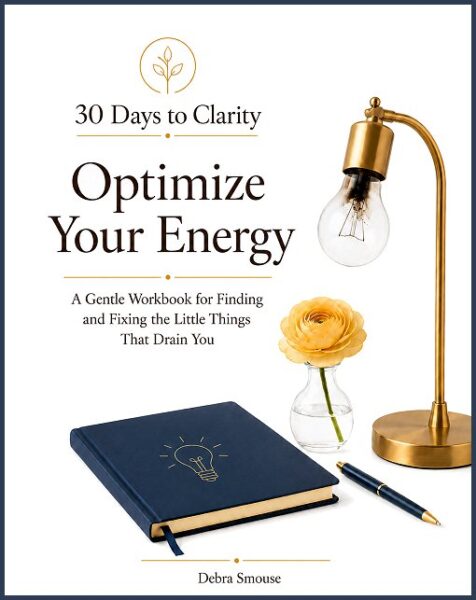 Ready to begin making your surroundings fit the woman you’re becoming?
Sign up for 30 Days to Clarity Monthly News, and I’ll send you Optimize Your Energy, my free workbook for finding and fixing the little things that drain you.
You’ll also receive monthly encouragement for clearing clutter for your mind, body, and soul.
You May Also Find These Articles Helpful
 From Feeling Invisible to Being Seen: Daily Habits That Help You Show Up
 What Are You Carrying That No Longer Fits?
 What is a Sex Kitten? (Here’s 30 Traits to Cultivate and Channel Yours)
 Stop Waiting for Life to Be Perfect Before You Enjoy It
 How to Make Daily Life Feel Better in Small, Practical Ways