Old family memories have a habit of becoming more valuable with time. A box of photographs that once sat unnoticed in a closet can suddenly feel irreplaceable when children grow up, relatives move away, or someone who could explain the stories behind those images is no longer around.
The problem is that many family memories still exist only on aging photographs, videotapes, film reels, slides, or handwritten notes. Waiting another decade can make organizing them harder. The best approach is not to tackle everything at once, but to start with the material that matters most and build from there.
Find Out What You Actually Have
Before buying storage boxes or starting a huge scanning project, gather the material in one place and see what exists.
Look through closets, attics, basements, drawers, and old cabinets. You may find printed photographs, negatives, slides, VHS tapes, camcorder tapes, film reels, photo albums, letters, and even old audio recordings.
Keep the first pass simple. Separate items by format rather than trying to identify every person and year immediately. If you discover a large collection that would be difficult to handle at home, services such as https://everpresent.com/ can become part of a larger preservation project for family photographs and older media.
Once you know what you have, the job usually feels much less overwhelming.
Start With the Memories You Would Hate to Lose
You do not need to digitize every photograph your family has ever taken before making progress. Start with the material that would be hardest to replace. That might include wedding photographs, childhood pictures, recordings of grandparents, family holidays, or the only video you have of a particular relative.
This approach gives you an immediate priority list. It also protects the most meaningful material first instead of spending hours scanning duplicate vacation photos while more important items remain untouched. Ask other family members what matters most to them too. A photograph that seems ordinary to you may be the only image someone else has of a particular person or home.
Preservation works better when it becomes a shared family project rather than one person’s attempt to decide what everyone should value.
Ask Questions While Someone Still Knows the Answers
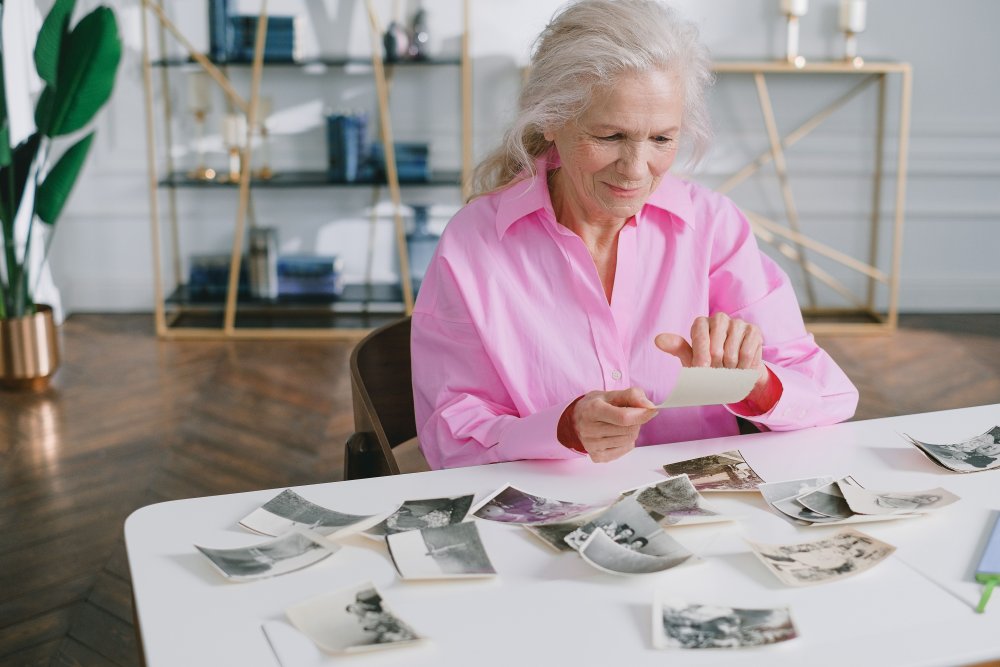
A photograph without context can lose much of its meaning. You may recognize your grandmother immediately, but will your children? What about the people standing beside her? Where was the picture taken? Was it a wedding, holiday, birthday, or ordinary Sunday afternoon?
Older relatives often carry details that were never written down because everyone at the time simply knew them. Sit with parents, grandparents, aunts, uncles, or other relatives and go through a manageable number of pictures together. Record names, places, approximate dates, and any stories that come up.
Do not turn the conversation into an interrogation. Let people wander into memories. The story about why someone was wearing an unusual outfit or why the family visited a particular town may eventually become more meaningful than the photograph itself.
If possible, save those stories alongside the digital files rather than relying on everyone to remember them later.
Handle Originals More Carefully Than Before
Old photographs and tapes often survive decades of casual storage, which can make them seem tougher than they really are. Avoid keeping valuable photographs in damp basements, very hot attics, garages, or places exposed to direct sunlight. Temperature swings, moisture, and light can gradually damage photographs and other media.
Use clean, dry hands when handling prints and avoid writing directly across the front or back with anything likely to damage the image. Older albums can also create problems if photographs are stuck to deteriorating pages or covered with aging adhesive.
Do not force delicate photographs out of albums simply because you have decided to organize them today. If something appears fragile or permanently attached, it may be better to leave it alone until you know how to handle it safely.
The goal is preservation, not creating new damage while trying to prevent future damage.
Create More Than One Digital Copy
Digitizing family memories solves only part of the problem. A folder sitting on one laptop is still vulnerable. Computers fail, phones disappear, external drives stop working, and files can accidentally be deleted. Keep important digital memories in more than one location. You might maintain a copy on a computer, another on an external drive, and another through a reliable cloud-storage service.
Organization matters too. A thousand scanned images named with random numbers can become almost as difficult to use as a box of loose photographs. Create folders that make sense to your family, perhaps by year, family branch, event, or person. File names do not have to contain every detail, but enough information to make searching easier later is useful.
Once the basic structure exists, adding new material becomes much simpler.
Share Copies Instead of Keeping Everything With One Person
Family archives often accidentally become one person’s responsibility. One sibling takes the albums home, another keeps the old tapes, and years later nobody remembers who has what. Digital copies make it much easier to prevent that problem.
Share important folders with close relatives or create copies for family members who want them. This gives more people access to the memories while also creating additional protection if one person’s files are lost.
You can also use preserved photographs more actively. Create albums for birthdays, send old pictures in family chats, make photo books, or put together a collection for younger relatives.
Memories are much less likely to disappear when people continue using and talking about them.
Don’t Wait Until You Have Time for the Whole Project
A family archive can look enormous when you imagine finishing everything at once. So do not.
Choose one box this month. Scan one album. Identify twenty photographs with a parent. Organize one folder of digital images. Transfer one particularly important tape. Small progress adds up surprisingly quickly.
The biggest risk is often not doing the job imperfectly. It is leaving everything untouched because the project feels too large to begin.
Old family memories become harder to replace with every passing year. Starting now gives you the chance to preserve not only the images themselves, but also the names, voices, places, and stories that give them meaning.
Grant Yourself Permission to Love Every Version of Yourself
Snag a free workbook and get inspiration .
>>Discover More Ways to Love Your Life and Yourself<<