
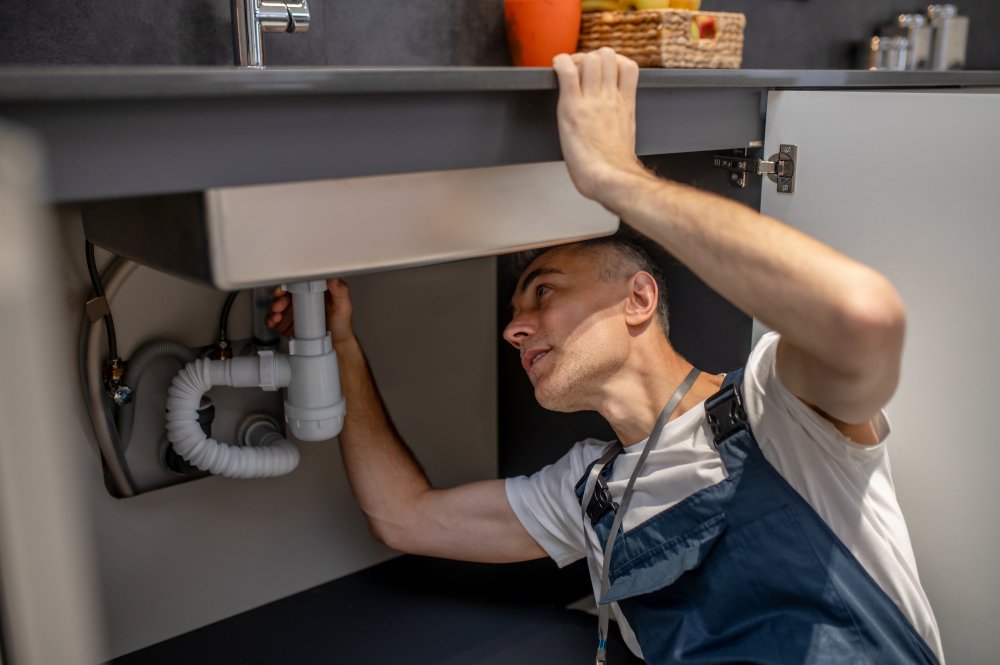
Most homeowners think about their plumbing only when something goes wrong. But the pipes running through your walls, floors, and crawl spaces are under continuous mechanical stress from a source that rarely gets attention: temperature. Every time the mercury rises or drops sharply, your plumbing expands, contracts, and absorbs pressure shifts that accumulate over years. Understanding this process gives you a practical advantage: you can identify risk points before they become emergency repairs.
Why Temperature Changes Put Stress on Your Plumbing
Pipes are not static structures. Copper, PVC, CPVC, and PEX all change physical dimension in response to heat and cold. Copper expands roughly 1.7 millimeters per meter for every 10°C (18°F) change in temperature. In a 20-foot supply run, a 40°F daily temperature swing produces measurable movement at every joint and fitting. Multiply this across an entire home’s pipe network, cycling through hundreds of heating and cooling events each year, and the accumulated mechanical fatigue is substantial.
The primary damage driver is not cold or heat alone – it is the differential: the rate and magnitude of change. A slow seasonal transition gives materials time to adjust. A sudden cold snap after a warm spell does not. This is why the first hard freeze of the season, not the coldest night of the year, causes the most failures.
Winter: The Freeze-Thaw Threat
Water expands approximately 9% in volume when it freezes. Inside a sealed pipe, that expansion generates internal pressure that can exceed 2,000 psi at any point where ice forms a plug and liquid water cannot escape. Most residential pipes are rated for far less. The failure point is typically a joint, elbow, or diameter change – not necessarily where the ice is, but wherever the pipe is structurally weakest.
Mini-scenario 1: A homeowner in a region with cold winters leaves for a long weekend in January. Overnight temperatures drop to 14°F. The hot water supply line running through an exterior garage wall – uninsulated, outside the building’s thermal envelope – freezes. An ice plug forms near a 90-degree elbow. The owner returns to find no hot water in the kitchen, then discovers the pipe has split at the fitting. The repair takes two hours. The water damage to the drywall and subfloor underneath adds weeks and cost that dwarfs the original repair.
The variables that determine freeze risk are consistent: pipe location relative to insulation, wind exposure (wind chill accelerates heat loss from pipe walls far faster than ambient temperature alone), and whether the home is occupied and heated continuously. Homes left unoccupied during cold snaps carry disproportionately high risk.
What freezes first: Pipes in exterior walls without adequate insulation, unheated garages, crawl spaces, and pipes running along slab edges are the highest-risk locations in most homes. Interior pipes in a continuously heated home rarely freeze unless there is a heating system failure.
Spring Thaw: The Damage That Appears Later
Many freeze-related failures are not discovered during the freeze itself. When temperatures rise and ice melts, pressure is released – and pipes that were cracked but not fully separated begin to leak. The first sign is often a wet ceiling, a soft spot in flooring, or a water bill that has increased without explanation.
The freeze-thaw cycle also creates micro-fractures in older copper and galvanized steel pipes that are not immediately visible. These fractures propagate across subsequent freeze events, producing failures months or even years later with no obvious proximate cause. A post-winter inspection has diagnostic value even when no visible damage occurred during the season.
Summer: Heat, Pressure, and Seal Degradation
High temperatures affect plumbing in ways that are less dramatic than a burst pipe but equally cumulative.
Closed-system pressure buildup: When a water heater heats a full tank from 50°F to 120°F, water volume increases by roughly 3%. In a closed plumbing system – one with a backflow preventer and no expansion tank – that expanded water has nowhere to go, and system pressure rises. Over time, this repeated pressure increase stresses the T&P (temperature and pressure) relief valve, tank welds, and supply line connections. An expansion tank installed on the cold water inlet is the standard solution. Many older homes lack one.
Rubber and polymer component wear: Faucet cartridges, toilet flapper valves, and hose bib washers are made from rubber or synthetic compounds that degrade faster under sustained heat. A component rated for a decade at 65°F may begin failing in 6-7 years in a hot climate.
Mini-scenario 2: A homeowner notices the kitchen faucet has started dripping. It was fine all winter. The culprit: the rubber washer in the cartridge has hardened and cracked after a particularly hot stretch of summer weather. The drip measures about 10 gallons per day – minor now, but left for a full summer it adds roughly 900 gallons to the water bill. Replacing the cartridge costs under $20 in parts.
In regions where summers are dry and hot, soil also shrinks and shifts. This changes the grade and support under buried supply lines, introducing bending stress at connection points. Older cast iron drain lines and clay-jointed sewer laterals are especially susceptible.
Fall: The Most Important Maintenance Window
The transition into cold weather is the highest-leverage maintenance period of the year. Actions taken before the first freeze directly reduce emergency risk for the entire winter.
A practical fall checklist:
-
- Shut off and drain exterior hose bibs; frost-free bibs still require disconnecting hoses
- Insulate pipes in unheated spaces: garage walls, crawl spaces, attic pipe runs
- Verify the T&P relief valve on the water heater is functional and not corroded shut
- Inspect washing machine supply hoses for cracking or bulging near the fittings
- Check that crawl space vapor barriers are intact; moisture combined with cold is more damaging than cold alone
- Locate and test the main water shutoff; operating it under pressure during an emergency is not the time to discover it has not moved in a decade
The Highest-Risk Zones in a Typical Home
Not all plumbing is equally exposed. Risk concentrates in predictable locations.
| Zone | Primary Risk | Minimum Mitigation |
| Exterior walls (uninsulated) | Freeze-burst | Pipe insulation; open cabinet doors during cold snaps |
| Crawl space | Freeze, ground movement | Insulate lines, seal vents, monitor moisture |
| Garage (supply lines to laundry or utility sink) | Freeze | Heat tape or pipe rerouting |
| Attic runs (warm climates) | UV/heat degradation of PVC | Insulation, shade where feasible |
| Slab-edge supply runs | Ground movement in freeze or drought | Regular inspection; reroute if recurrent failures occur |
Building a Seasonal Plumbing Maintenance Routine
A calendar-based inspection routine catches the majority of temperature-related failures before they escalate. The goal is predictive maintenance rather than reactive repair.
Mini-scenario 3: A property manager oversees a portfolio of twelve rental homes. After two consecutive winters producing burst pipe insurance claims, she implements a fall inspection checklist each October. The first year, the inspection identifies four uninsulated crawl space pipe runs and two water heaters without expansion tanks. Repairs total $1,400. That winter produces zero burst pipe claims. She adds a spring inspection to catch post-thaw micro-damage. Insurance premiums drop at the next renewal.
Plumbing professionals who operate in regions with pronounced seasonal temperature variation – such as Durham Master Plumbers, who service areas that move through wide temperature ranges across the year – consistently find that the majority of winter emergency calls trace back to deferred pre-season preparation. The pattern holds across climate types: homes with documented fall maintenance histories generate substantially fewer emergency calls.
A four-season schedule that works:
-
- Fall (Oct-Nov): Drain exterior lines, insulate exposed pipes, test pressure relief valve, inspect hose bibs
- Winter (Dec-Feb): Monitor unheated spaces during cold snaps; maintain indoor temperature above 55°F if traveling
- Spring (Mar-Apr): Inspect for post-thaw leaks, check water heater anode rod, examine soil settling at foundation
- Summer (Jun-Aug): Check rubber seals and cartridges, verify expansion tank pressure, inspect buried line access points if drought conditions exist
Frequently Asked Questions
At what temperature do pipes start to freeze? The commonly cited threshold is 20°F (-6°C) for pipes in uninsulated exterior spaces, but wind chill and duration of exposure affect this significantly. Pipes in exposed locations with wind can begin forming ice plugs at temperatures as high as 28°F (-2°C). The length of time the temperature stays below freezing matters as much as how far below freezing it goes.
How do I know if a pipe froze but did not burst? Reduced or absent flow from a specific fixture during or immediately after a cold period is the primary indicator. If flow returns to normal once temperatures rise, the pipe likely thawed without rupturing. Check all accessible joints and connections carefully for the next 48 hours – delayed leaks are common as residual ice melts and pressure redistribution stresses weakened sections.
Does PEX handle temperature changes better than copper? PEX is more flexible and has some capacity to expand before rupturing, making it more freeze-tolerant than rigid copper. However, PEX is not freeze-proof. A fully sealed PEX pipe with a solid ice plug will still fail under sufficient pressure. PEX also resists micro-fracture propagation from thermal cycling better than rigid metal pipe.
What is thermal expansion, and why does it matter for a water heater? When water is heated, it expands in volume. In a closed plumbing system (one with a backflow preventer and no expansion tank), this expanded volume has nowhere to go, which raises system pressure. Over time, elevated pressure stresses tank welds, fittings, and the T&P relief valve. An expansion tank – installed on the cold water inlet – absorbs this pressure by design. Homes built after approximately 2010 in most jurisdictions are required to have one; older homes frequently do not.
Can summer heat damage pipes directly? Prolonged direct sun exposure degrades PVC pipe (UV exposure causes brittleness and cracking). Sustained high ambient temperatures accelerate rubber and polymer component wear. The more common summer failure mechanism, however, is closed-system pressure accumulation in hot water systems and soil movement affecting buried supply lines during drought conditions.
How often should plumbing be inspected for seasonal damage? A visual inspection each fall and spring is a practical minimum for most homeowners. Homes with known risk factors – uninsulated crawl spaces, older galvanized supply lines, cast iron drain laterals, no expansion tank, or a documented history of freeze events – benefit from a professional inspection every one to two years to assess cumulative fatigue that is not visible at the surface.
What to Do If You Notice Seasonal Damage Signs
Temperature-related plumbing damage is largely preventable, but it accumulates gradually and does not announce itself until a threshold is crossed. Reduced pressure at a fixture, discolored water after a temperature swing, an unexplained increase in the water bill, or soft spots in flooring or ceilings near pipe runs are each worth investigating before the next seasonal transition.
A professional assessment early in the damage cycle is consistently less expensive than repairing the downstream consequences – water damage to structure, drywall, flooring, and insulation – of a failure that was allowed to develop. If any of these signs are present, addressing them before the next period of thermal stress gives you the best outcome.
A Home You Love Helps You Love Your Life More
Snag a free workbook and get inspiration on all the ways to love your life even more.
>>Click Here to Discover Additional Strategies for Managing Stress, Anxiety, and Burnout <<
You May Also Find These Articles Helpful
 How to Stay Motivated in Winter: Beat the Seasonal Slump
 Stay Motivated Year-Round: Seasonal Habits and Energy Hacks for Productivity & Joy
 Drink More Water in Winter: Stay Hydrated & Boost Energy
 Winter Reflection: What This Season Is Good At
 Winter Skin Hydration: 19 Easy Tips for Healthy, Glowing Skin