
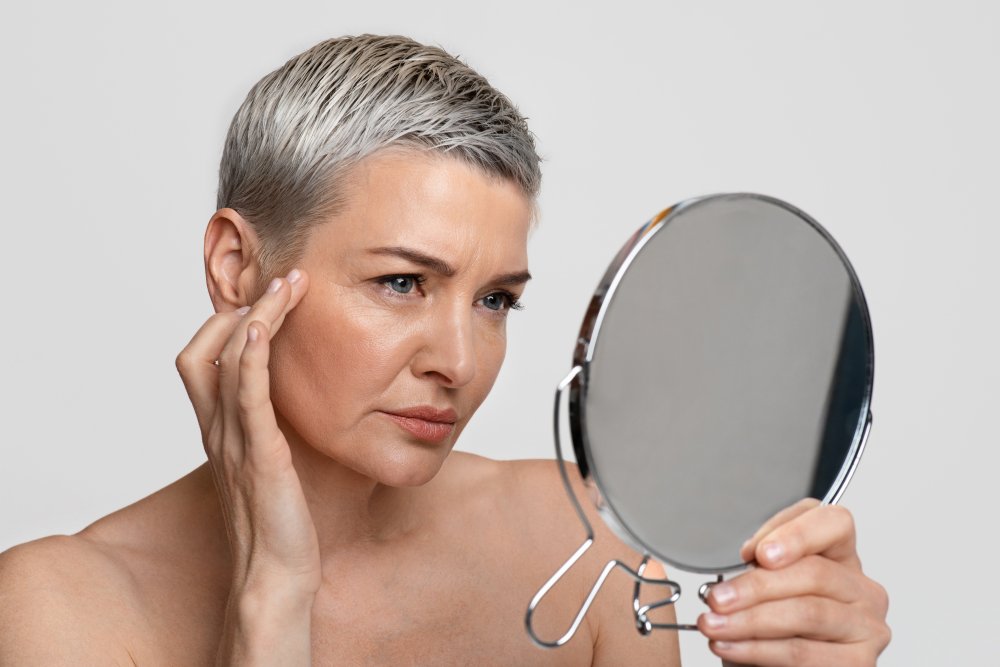
It’s easy to assume eyelid surgery is mostly about appearance—lifting, smoothing, correcting what feels visibly “off.” But the closer you get to an actual consultation, the more that assumption starts to shift. What seems like a surface-level concern tends to open into something more layered, where movement, muscle behavior, and even eye protection begin to matter just as much.
In a city like New York City, where subtle differences don’t go unnoticed, that deeper evaluation becomes part of the conversation pretty quickly. The way an eyelid functions—how it lifts, closes, and holds its position—can influence outcomes in ways people don’t always expect at first.
Below are 6 medical tests doctors rely on to understand the function before moving forward.
1. Levator Muscle Function Test
A noticeable droop in the upper eyelid doesn’t always come down to loose skin; sometimes it’s the muscle responsible for lifting the lid that isn’t doing its job consistently. When that muscle underperforms, the eyelid can look heavier or sit lower, even if the surrounding skin appears relatively unchanged.
New York has a dense concentration of oculoplastic surgeons, which means patients often get highly specific answers early in the process. Those exploring blepharoplasty in NYC frequently find that consultations go deeper than expected — moving from cosmetic concerns into questions about muscle function and lid mechanics. What looks like a surface issue often has more going on beneath it.
When surgeons evaluate suitability, the emphasis moves toward how the eyelid actually performs in motion. Rather than relying only on visual appearance, they assess how far the eyelid travels between downward and upward gaze, since that movement reflects the strength of the levator muscle. This added layer of evaluation helps determine whether the concern is primarily structural or skin-related, shaping how the next steps are understood.
2. Margin Reflex Distance (MRD) Measurement
Small differences in eyelid height can go unnoticed in daily life, yet they become obvious when measured precisely. MRD focuses on the distance between the pupil’s light reflection and the upper eyelid margin, giving a clear indication of how the eyelid sits in relation to the eye.
What stands out here is how even minor asymmetries can affect overall facial balance. The measurement doesn’t just confirm positioning—it helps reveal patterns that aren’t always visible at first glance. Once these differences are mapped out, the concern tends to feel less subjective and more grounded in measurable change. That shift alone can alter how people interpret what they’re seeing in the mirror.
3. Eyelid Closure and Blink Dynamics
Some of the most important details show up when the eyes are closed, not open. Incomplete closure or irregular blinking can lead to dryness, irritation, or a constant, hard-to-explain discomfort.
Observation here focuses on how naturally the eyelids meet and whether blinking happens effortlessly or with subtle strain. It’s not just about movement—it’s about consistency and ease over time.
When closure isn’t complete, even slightly, the eye’s surface can become more exposed than it should be. That realization tends to shift attention toward function in a way that isn’t immediately obvious from appearance alone.
4. Skin Elasticity and Redundancy Assessment
Excess skin might seem like the most straightforward issue, but its behavior can be surprisingly complex. Some skin stretches easily and returns to place, while other areas fold or linger in ways that affect how the eyelid rests.
By gently manipulating the skin, doctors can see how it responds under minimal pressure and whether it maintains its structure. This isn’t just about how much skin is present—it’s about how it behaves in motion and at rest. Once that difference becomes clear, the concern starts to feel less about quantity and more about how the skin interacts with the underlying support.
5. Tear Film and Ocular Surface Testing
Discomfort around the eyes doesn’t always come from what’s visible. In some cases, it’s the tear film—the protective layer over the eye—that isn’t functioning as it should, leading to dryness or irritation that affects eyelid function.
Tests here might involve observing tear distribution or using dye to track how moisture spreads across the eye. When the tear film is unstable, even normal eyelid movement can feel uncomfortable. This tends to shift the focus toward how the eyelid supports the eye’s surface rather than just how it looks from the outside.
6. Visual Field Testing
There are situations where the concern isn’t appearance at all—it’s visibility. When the upper eyelid begins to interfere with the field of vision, even slightly, it can affect daily activities in ways that build up over time.
Visual field testing measures the extent of upper visual field obstruction. What might feel like a minor obstruction can prove more significant when mapped out clearly. Once that limitation is measured, the conversation tends to shift from cosmetic preference to functional impact, which changes how decisions are approached.
Conclusion
Taken individually, each of these tests highlights a different aspect of eyelid function, but together they create a more complete understanding of what’s actually happening. What starts as a visual concern often unfolds into something more layered, where movement, support, and comfort all play a role. By the time everything is evaluated, the situation usually feels less uncertain and more grounded in how the eyes truly function day to day.
Want to grow your confidence and love your life more?
Snag a free workbook and get inspiration .
>>Discover More Ways to Love Your Life and Yourself<<