
You’ve finished all your Christmas shopping, you’ve successfully avoided three family debates about politics, and yet somehow, your brain is still on overtime. You scroll through meal planning apps, ponder what book to read next, and somehow feel guilty for not having a word of the year already picked. Decision fatigue is real, my friends. And here’s the thing: you don’t have to decide yet.
Even though I love the tradition of picking a word of the year—one that will guide intentions, choices, and moods for the next twelve months—there was one year I didn’t choose until March. Not January 1. March. And do you know what happened? It was one of my most transformational years. That was the year that I met JB, lost my mom, shifted my career, and moved from Texas to Ohio.
I didn’t suddenly fail at self-improvement, nor did the universe cancel the possibility of growth. I just gave myself permission to wait.
Waiting doesn’t mean inaction. It doesn’t mean indecision. It’s not an excuse to procrastinate indefinitely or avoid responsibility. What it does mean is that there’s a rhythm to clarity. Some decisions demand immediate attention—what’s for dinner, who gets the last cookie—but the big, soft, transformative ones? They deserve patience. They deserve space to form naturally, without pressure.
Decision Fatigue Is Real
Modern life is relentless in its demand for choices. Every swipe, click, scroll, or tap asks something from your brain: should I buy this? Should I RSVP? Should I answer that email now? Even small decisions drain mental energy. Psychologists call this decision fatigue, and the research is clear: the more decisions we make, the less effectively we make them. By the time the “big” questions arrive, our brains are exhausted, and clarity becomes a luxury.
This is why waiting can actually be an act of self-care. Giving yourself the space to pause, to not pick a word of the year, to not decide on a new project or life overhaul in the first week of January, is a permission slip for your own mind. It’s saying: I don’t have to be ready yet, and that’s okay.
The Power of “Not Yet”
Saying “not yet” is surprisingly liberating. It doesn’t shut doors. It doesn’t close possibilities. It simply acknowledges that life unfolds in its own timing, not ours. You can let ideas percolate, let feelings settle, and let perspective deepen. Often, the decisions we make too quickly—under pressure or just to “get it done”—end up feeling heavy or unsatisfying. Waiting allows wisdom to arrive naturally.
Sometimes we rush to make decisions just to check a box or feel productive. But those hastily made choices often feel heavy or misaligned. By embracing “not yet,” we give ourselves permission to pause, to notice what’s really happening, and to let insight emerge naturally. “Not yet” doesn’t mean inaction. It means presence. It means staying open to what’s coming, trusting that when the timing is right, understanding will arrive. Not because we pushed it, but because we allowed it to.
Waiting as an Active Practice
Here’s the catch: waiting doesn’t mean doing nothing. You can cultivate readiness while still holding space. You can journal, reflect, move your body, connect with friends, notice what feels heavy or light. Waiting is active in its own quiet way. Some reminders for these in-between seasons:
Not Everything Needs a Name
Some things simply don’t need a label or a decision right now. You don’t have to define your word of the year, map out every life goal, or even decide what “next” looks like. Sometimes, clarity arrives in its own time, and trying to force it only adds pressure.
Not everything requires naming because life is messy and layered. Sometimes our feelings are too subtle or too complex to pin down immediately. Maybe you sense a shift in your energy, or you’re quietly noticing a pattern in your relationships, or you feel a new kind of restlessness that doesn’t yet have a name. Sitting with it without forcing a title or a plan can be profoundly clarifying. It allows your intuition to surface, unhurried and unpressured.
Some Seasons Are for Waiting and Watching
Other times, the most important work is quiet: noticing what unfolds, caring for small routines, and letting life develop without interference. Watching and tending might mean taking walks, tending a plant, writing short notes in your journal—not to solve or fix anything, just to be present and attentive.
This is a season for gentle observation. You might notice the subtle rhythms of your day, the tiny sparks of joy, or the small ways your mind shifts without you even realizing. You don’t have to push or prod or make big decisions. You can simply pay attention, nurture the small things that bring you comfort or growth, and trust that clarity will emerge naturally. Tending isn’t action for action’s sake—it’s presence in its most tender form.
Rest Is Not Avoidance
Pausing doesn’t mean procrastination. Taking time to rest, reflect, and recharge is not avoidance—it’s preparation. The space you give yourself allows for insight, creativity, and emotional clarity. Often, when you return to a decision after rest, it feels lighter, simpler, and more aligned with what you actually want.
Rest is not failure. It is part of the process. It is the quiet prelude to understanding, the soft pause that allows your mind to untangle itself. Think of it like stepping back to see the whole painting rather than getting lost in one brushstroke. The more you honor rest, the more ready you will be when the time to decide actually arrives.
Small Decisions Still Matter
The paradox is that giving yourself permission to wait doesn’t free you from all decisions. Small, day-to-day choices still happen. You still decide what to eat, how to spend your evening, whether to reply to a text. But these decisions—these small, contained choices—actually prepare you for the bigger ones. They keep your mind sharp, your habits in check, and your sense of agency alive, without draining you completely.
So yes, while your brain might be groaning from all the small choices it’s had to make since Christmas, the big ones? They can wait. And in the meantime, you might notice something: a decision doesn’t always need to be “made” to be moving you forward. Simply observing, reflecting, and leaning into life day by day can bring more clarity than forcing yourself to commit.
A Gentle Reminder
You don’t have to have everything figured out. You don’t have to outline your goals for next year. You don’t have to pick your word of the year by January 1—or even by February, March, or April. Life is in motion, and so are you. Sometimes the pressure to decide is more about cultural expectation than personal need. Give yourself permission to sit with uncertainty, to notice your feelings, and to let the right answer arrive naturally.
I get the feeling of rush, rush, rush as the holiday seasons speeds towards New Year’s Eve. But that is exactly why it’s OK to simply wait.
And here’s a little secret: waiting often gives you better insight than rushing. By letting your mind rest, your heart settle, and your instincts speak, you may find that what finally becomes clear is not just the “right” decision—but the one that truly feels like you.
So this year, if your brain is weary, if the calendar is already overwhelming, if your inner voice is nudging you toward choices you’re not ready to make—lean into it. Give yourself permission to wait. You don’t have to decide yet.
Because sometimes, the most powerful act of all is simply giving yourself the space to breathe.
When You Are Ready to Decide,
My Word of the Year Guide is There for You
Life is busy. Decision fatigue is real. Yet I also know that if you are here, you desire to have a nourishing daily life. This eBook / workbook is designed to help you with that.
A Guiding Light for 2026: Discover Your Word of the Year.
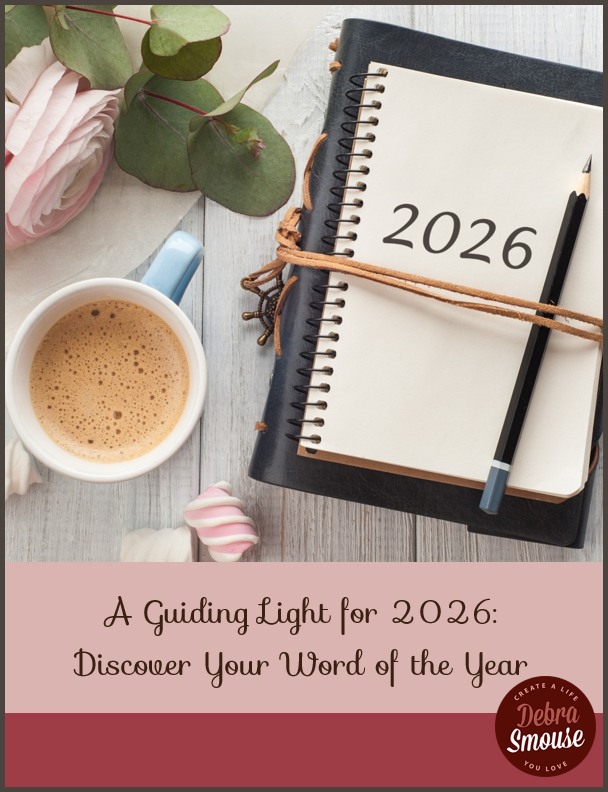 Here’s what you’ll find in A Guiding Light for 2026: Discover Your Word of the Year.
-
- In Part One, you’ll take a look back as you Bid Farewell to 2025.
- You’re invited to look ahead to 2026 and begin to breathe life into your desires as you explore Part Two.
- In Part Three, you’ll review a list of more than 1000 words and begin pondering what Word (or words) is right for YOU in 2026.
- To help you gain clarity, Part Four provides you with a series of tools to help you gain clarity around the best Word to serve as a touchstone to serve as your companion through your journey in 2026.
- In Part Five, you’ll Declare Your Word (or Words) of 2026.
I’ve also added two Bonus section to help you you create a more nourishing year.
Bonus One explores Ways to Work with Your Word of the Year. This section suggests a dozen ways to help seal your Word…and more than a dozen journal prompts to continue to check-in with your Word throughout 2026.
Bonus Two is an invitation to dive into your emotions. There, I’ll share how you can use your emotions for good. And as a path and process for creating days that are more nourished. And satisfying.
Get your FREE Copy of this powerful workbook: A Guiding Light for 2026: Discover Your Word of the Year.
>>Want to read more tips on how to love your life? Click here!<<<
You May Also Find These Articles Helpful
 A Guiding Light: Discover Your Word of the Year for 2026
 Decision Fatigue is Real: Here’s 9 Ways to Deal
 on Brand New Years and the Truth About Making Changes in Your Life
 How Knowing Your Decision Making Process Can Help You Gain Clarity
 What Decision Making Strategies Can Help You Lead a Happier Life?