Solo entrepreneurs often walk into trade shows and outdoor events feeling outgunned. On one side sits a corporate exhibitor with a team of six, a truckload of furniture, and a backdrop that looks like a mini retail store. On your side, it’s just you.
But here is the truth every seasoned exhibitor eventually learns: a large presence is not about headcount. It is about strategic use of space, cohesive branding, and tools that work as hard as you do.
This guide breaks down exactly how to look like a company of twenty when you are a company of one.
Claim Your Vertical Space First
Most solo exhibitors think about their footprint horizontally.
-
- the table,
- the chairs,
- the tablecloth.
This is a mistake. Attendees scan event floors from a distance, and what catches the eye is height, not width.
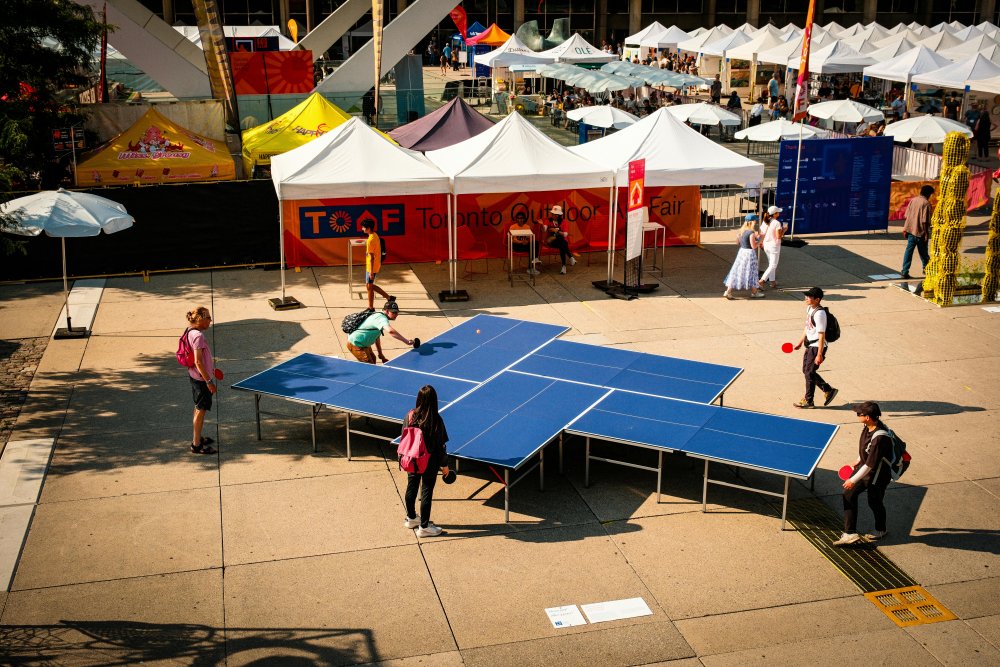
The single most impactful investment a solo exhibitor can make is in professional overhead coverage. Custom canopy tents rise ten feet off the ground, creating a visual anchor that signals a permanent, established business, not a hobbyist with a folding table. When your brand name and logo are printed boldly across all four valance sides, attendees spot you from the moment they walk through the entrance, long before they reach your row.
Vertical visibility is your silent billboard. It works while you are busy closing a sale, taking a bathroom break, or talking to the person right in front of you.
Create Credibility Through Cohesion
One of the fastest ways to undercut your professionalism is to show up with mismatched equipment. A printed banner that does not match your tablecloth, flags in different shades of blue, and a tent with a logo that looks nothing like your business card, all of these send a subliminal message that you are operating informally.
Investing in Custom Pop Up Tents that coordinate visually with your table covers, flags, and signage creates what designers call a “shop-in-shop” experience. When every element of your display uses the same colors, fonts, and imagery, the entire booth reads as a single, professionally designed environment. Attendees stop noticing that it’s one person behind the table. They simply experience a brand.
Cohesion also communicates pricing power. Buyers instinctively associate polished visuals with premium products. A unified display allows you to command higher rates and attract more serious inquiries without saying a word.
Design Your Layout for a Solo Operator
Traditional booth layouts place a long table across the front of the space, which acts as a physical and psychological barrier between you and your potential customer. For a solo exhibitor, this is the wrong approach.
Instead, try an open-front strategy. Move your table to the side or back of your footprint. This invites attendees to step under the canopy and into your space. Once someone has physically entered your booth, they are far more likely to wait for you to finish a conversation rather than moving on. You have, in effect, created a small storefront and people respect the implicit rules of a storefront.
Use the interior of your tent to place small sign stands that answer the three or four questions you hear most often. These silent sellers keep curious visitors engaged and informed while you are occupied with another lead. Think of them as a junior staff member who never takes a lunch break.
Simplify Your Graphics for Maximum Impact
Solo operators frequently make the mistake of putting too much information on their displays. Long lists of services, crowded graphics, and walls of text require attendees to slow down and read and at a busy event, almost nobody does.
The more effective approach is to lead with one powerful hero image: a single, high-resolution photograph that shows your product or service in action. Your visual message should communicate what you do and who you serve in under three seconds. When your display achieves that, it feels premium and confident. When it does not, it feels cluttered and uncertain.
Clean design paired with a professional-grade tent creates an environment that feels considered and well-resourced. That perception alone is worth more than any list of credentials you could print.
Automate Your Lead Capture
Even the most energetic solo exhibitor will hit a wall by mid-afternoon. Building a large presence also means preserving your energy for human interaction by automating everything else.
Place QR codes on every surface of your display.
-
- your tent walls
- your table cover
- your flag stands.
These codes should link directly to a booking page, a digital catalogue, or a short video demonstration. During a busy rush, a lunch break, or an unexpected conversation that runs long, your QR codes are capturing interest that would otherwise walk away.
When your physical setup projects authority and your lead capture runs on autopilot, you stop competing with large teams and start outperforming them.
Your presence is not about how many people you brought to the show. It is about how professional, visible, and credible you appear from the moment the doors open.
Your career contributes to loving your life even more.
Snag a free workbook and get inspiration on all the ways to love your life even more.
>>Read more Career Advice from a Life Coach that’s Reinvented Herself Multiple Times<<
You May Also Find These Articles Helpful
 The Power of Presence: Why Being in the Moment Is the Real Luxury
 Presence in the Time of Distraction: 17 Tools to Try
 Simple Pleasures Invite Presence and Happiness in Your Daily Life
 Congruency in the Office Propels Your Business (and Life) Goals Forward
 How to Declutter Without Going Minimalist So Your Home Reflects Your Personality